
- The core message for matrons: manage ward rosters and head-nurse activity in one observable, reportable structure.
- A head nurse has a single-ward operational view; a matron has a multi-ward supervisory view with aggregate reports.
- The default access path is director to matron to head nurse to staff, but access is configurable.
- Each ward's rules are defined once and applied to that ward's rostering every month.
What Is Matron-Suitable Software?
When ward rules live inside one person's memory, every month repeats the same cycle of scattered chat requests, manual spreadsheet edits, and night-shift fairness disputes. In this focused 5-minute read, see how head nurses, matrons, and hospital leads move from manual table-building to clear oversight—and test a live ward right away in the interactive shift demo.
Matron-suitable software is a system that manages ward rosters and head-nurse activity in one observable, reportable structure. Instead of several scattered processes for shift planning, the organization gets one integrated structure for defining rules, planning, changes and reports, with the matron as the middle oversight layer holding a dependable picture of all wards. This must be separated carefully from head-nurse software: a head nurse rosters and manages their own ward, while a matron observes wards, supervises and reports. Both work in one system, but their visibility and decisions differ, which is the basis of access-level design.
How Does a Matron Manage Multi-Ward Rosters at a Glance?
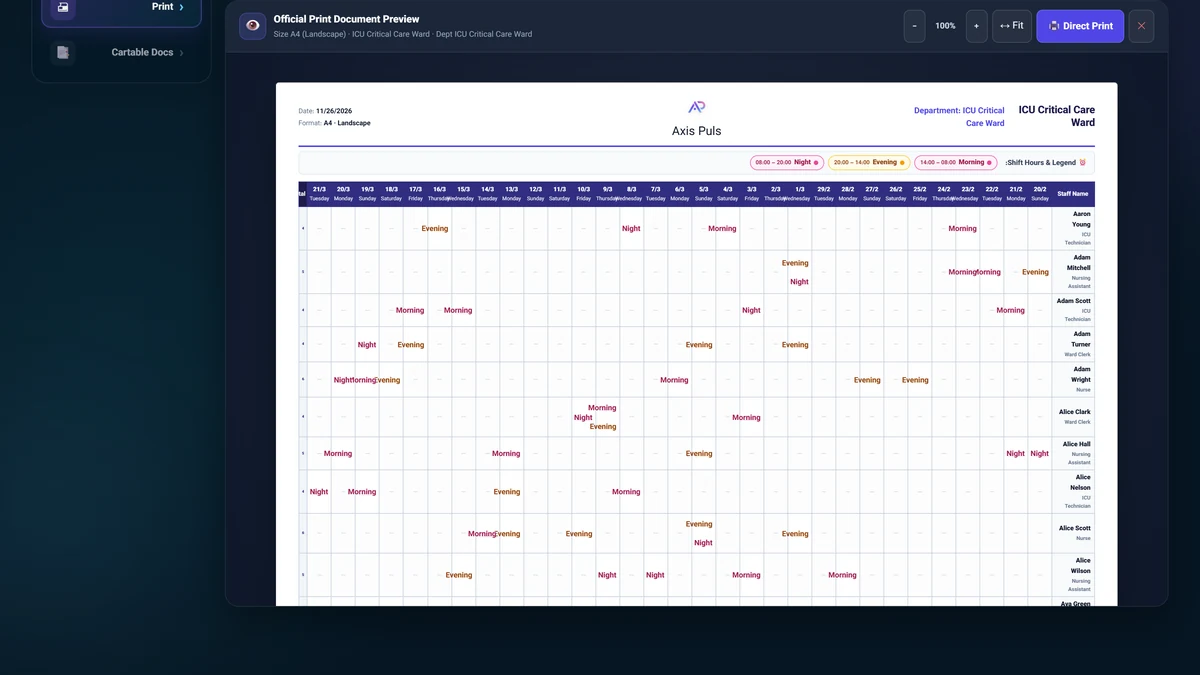
Managing several wards differs in kind, not just volume, from managing one. A head nurse lives inside one ward: the same team's requests, the same shifts' capacity, the same month's leaves and the same staff mix. A matron stands outside the wards and must see several pictures at once: which wards have next month's roster ready and which lag, where leaves affect coverage, which nights are fragile in which wards, and whether temporary cross-ward cover is needed. If each ward works in its own file and channel, answering these questions needs manual collection and tedious verification, and the final picture usually arrives after the decision window. The structured answer is to define all wards' structures in one system: organization down to ward, role, shift and capacity, with each ward's rules recorded once and applied monthly.
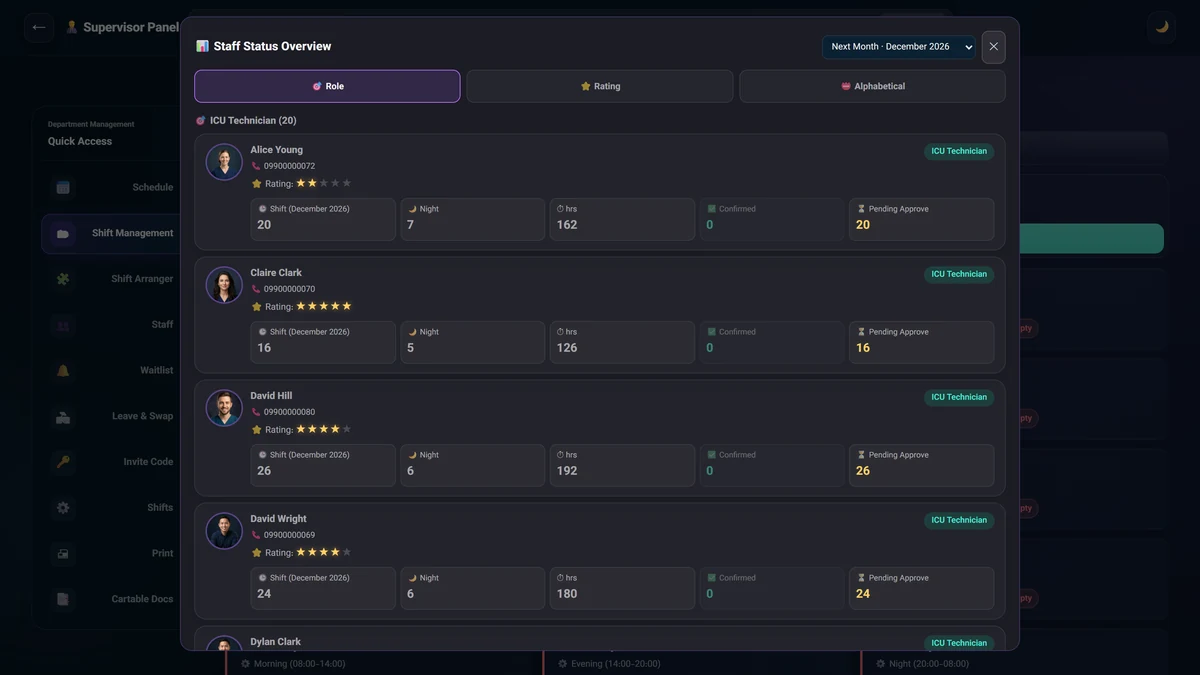
Once that discipline holds, management at a glance becomes real: the matron sees ward capacity completion, recorded leaves, pending requests and cases unfillable under defined conditions, without messaging each head nurse for every number. This does not mean interfering in daily head-nurse work; the head nurse remains the ward manager, setting rules, reviewing output, taking final decisions and supervising ward performance. The matron's role is higher-level supervision and coordination: spotting mismatches, supporting cross-ward decisions and confirming all wards follow the same approved rules.
| Hospital Role | Core Monthly Priority | Manual Bottleneck Today | Practical Outcome in Axis Puls |
|---|---|---|---|
| Shift Nurse / Staff | Predictable schedule and fair night rotation | Sending WhatsApp notes with no confirmation trail | Submit ranked preferences and track approval status |
| Head Nurse (Ward Lead) | Safe coverage across every shift without conflicts | Days spent rebuilding spreadsheets after one leave | Define ward rules once, generate drafts fast, sign off |
| Matron (Nursing Director) | Cross-ward balance and overtime visibility | Chasing mismatched Excel sheets across 10+ wards | Unified multi-ward oversight and clean sign-off trail |
| Hospital / HR Director | Compliance, cost control, and staff retention | Late attendance reconciliations and payroll disputes | Role-based access, audit logs, and verified monthly rosters |
How Do Head-Nurse and Matron Views Differ in Practice?
This is the key differentiation section. Head nurses and matrons work in one system but hold different jobs. A head nurse is a single ward's operational manager: setting that ward's rules, collecting that team's requests, judging that ward's output clinically, taking that ward's final decisions and supervising that ward's performance. Their horizon is one ward's one month, and success means reliable coverage under that ward's rules. A matron is a multi-ward supervisory manager: viewing ward rules side by side, reviewing head-nurse activity reports, spotting cross-ward mismatches and coordinating cross-ward decisions such as temporary cover or capacity review. Their horizon is the whole hospital, and success means balance and discipline organization-wide. Neither replaces the other, and the system removes no one's management; it reduces repetitive, computational planning work.
This separation has three practical effects. First, decisions speed up because each question reaches the right desk: a single-shift composition complaint belongs to the head nurse, a three-ward simultaneous shortage to the matron. Second, both keep credibility because each level's decision carries that level's report: the head nurse answers with assignment reasons, the matron with aggregate reports. Third, knowledge moves from memory to written rules: once each ward's rules are recorded, a head nurse's arrival or departure no longer carries ward memory away, and a new matron sees the same picture from the same structure.
How Are Fairness and Reporting Seen Hospital-Wide?
Shift-distribution fairness is the hospital's most sensitive topic and must be worded carefully: the system does not judge whether a manager is fair; the correct form is that the system provides tools to review and compute shift distribution so managers observe distribution more precisely. At matron level this means hospital-wide distribution reports: nights, holidays and hour totals per ward, cross-ward comparison and spotting pressure concentrated on people or wards. When reports show one ward covering the most nights three months running, the matron can knowingly compensate; when reports show balance, the same report becomes management's documented defense. Fairness tooling has three parts: distribution computation from recorded shifts and priorities, transparent reports and corrective manager decisions via re-rostering or rule tweaks.
Fair comparison with manual practice belongs here too, and must be two-sided. Manual methods suit small, stable wards: fast, low-cost, offline-capable, with direct control feel. Limits begin where staff and ward counts grow and rules diverge: conflict detection slips past publication, capacity control stays visual and manager-dependent, and each leave demands manual colleague-hunting. Structured practice instead needs initial rule definition, user training and request-window discipline; but it checks conflicts before finalization, measures capacity automatically and manages leave and cover inside the same list. Choosing between them should be clear-eyed, based on organizational size and complexity, not slogans.
| Mid-Month Change Scenario | What Happens via Phone & Paper | Structured Leave & Replacement Flow |
|---|---|---|
| Sudden sick call before a shift | Frantic phone calls to every off-duty nurse | Instant list of eligible staff matching role, rest, and hour caps |
| Planned leave for next month | Paper slip forgotten while building the Excel sheet | Logged ahead of scheduling and respected automatically |
| Peer-to-peer shift swap | Informal trade that accidentally triggers a night-to-morning violation | Rule & cap validation on both colleagues before head-nurse approval |
| End-of-month reconciliation | Wall printout no longer matches actual shifts worked | Single live schedule with full change history |
To connect this workflow with adjacent tools and real examples, explore Live Shift Arranger Demo, Nurse Shift Guide, Clinical Productivity Law, Excel vs. Shift Software, Smart Shift Management.
❓ Frequently Asked Questions from Real Workflows
Start Structured Multi-Ward Oversight
Manage ward rosters and head-nurse activity in one observable, reportable structure; define rules once and apply them every month.
Start Your TrialOr test a simulated ward right now without signing up in the Live Interactive Shift Arranger Demo.