
- Prioritizing means courageously choosing a few tasks and leaving the rest, not sorting the whole list.
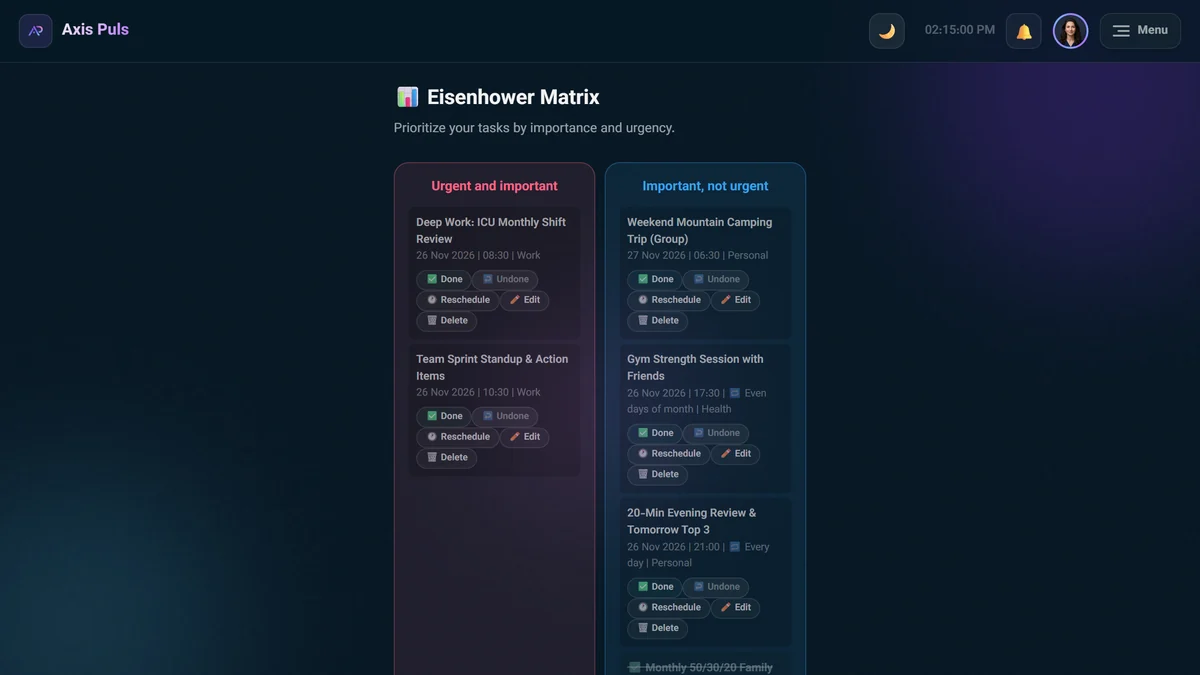
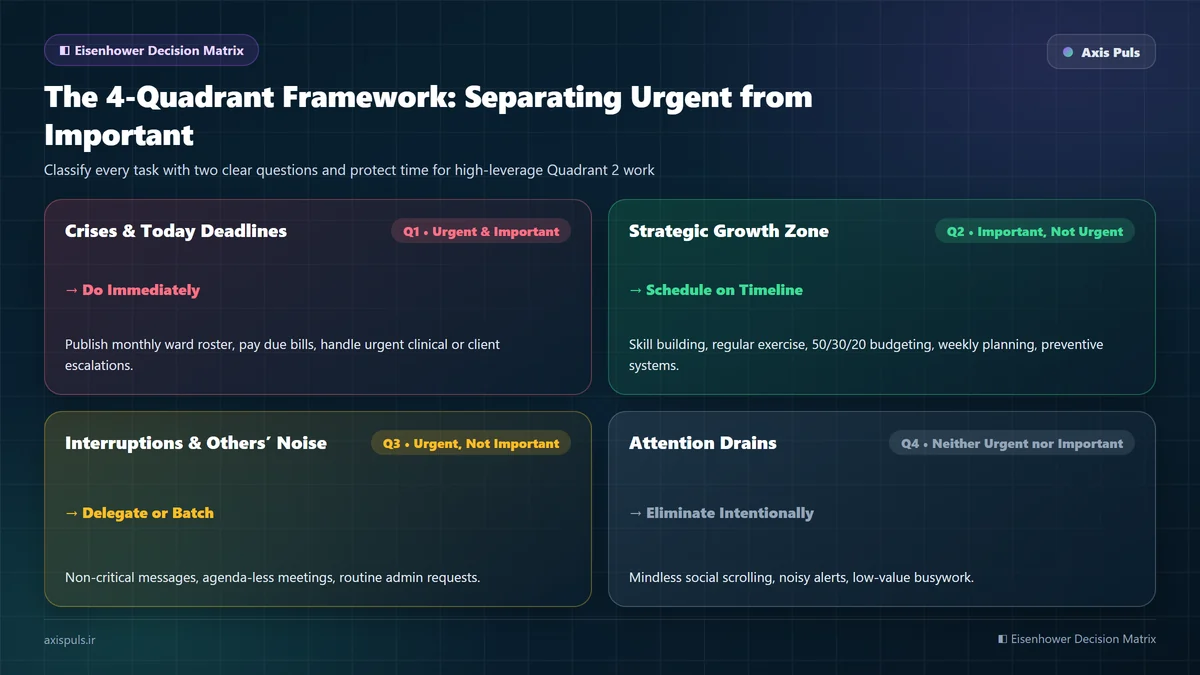
- With the Eisenhower Matrix (importance vs urgency) each task has four fates: do, schedule, delegate or delete.
- Choose only three daily priorities and keep them separate from the rest on the Today page.
- Floating work lives in priority mode; timed work lives in timed mode with an on-time reminder.
Online Priority Manager & Top 3 MITs Scheduler
Separate urgent noise from truly important work with Eisenhower priority tags, block your top 3 tasks, and save to your timeline.
Live preview of your schedule
How do we prioritize important tasks?
Most daily plans fall apart not from lack of discipline, but from overloading a flat list with twenty competing tasks before 9 a.m. In this practical 5-minute guide, we strip away productivity fluff and build a realistic rhythm using clear priorities and visual time blocks.
Most daily plans fall apart not from lack of discipline, but from overloading a flat list with twenty competing tasks before 9 a.m. In this practical 5-minute guide, we strip away productivity fluff and build a realistic rhythm using clear priorities and visual time blocks.
What is the difference between important and urgent?
Common judgment traps
In the Axis Puls add form, importance and urgency are recorded on two separate scales. After a few weeks this separation trains priority judgment. Apply the one-month test: if skipping a task for a month changes little, it is probably just busywork.
| Daily Planning Method | Real Practical Strength | Hidden Pitfall | Best Everyday Use Case |
|---|---|---|---|
| Plain Paper To-Do List | Zero friction and satisfying checkmarks | No time slots; urgent trivia crowds out deep work | Top 3 desk priorities for the morning |
| Calendar Slots Only | Clear view of fixed appointments | Treats low-impact errands the same as critical goals | Meetings, classes, and work shifts |
| Timeline + Eisenhower Priority (Axis Puls) | Combines time order in Today view with clear urgency/importance | Takes 30 seconds to tag priority when adding a plan | Busy workdays and rotating shift schedules |
| Weekly Review + Buffer Blocks | Absorbs unexpected delays without derailing the week | Requires a 15-minute weekly reset habit | Balancing career, study, and family life |
How do we manage urgent and important tasks together?
How the noon review retakes control
Even a good morning plan bends by noon, so a five-minute midday review is needed: what was done, what changed, and what is realistic with remaining energy. Tick completed items, remove irrelevant additions, and reorder the evening by real energy.
Instead of designing an elaborate system you abandon by Thursday, spend just three minutes each evening closing open loops and picking tomorrow's top three items inside your personal planner. Small, steady habits beat occasional perfection every time.
What sustainable system should we build from today?
A suggested three-week start
Give the system three weeks: week one runs only the nightly steps, week two adds the noon review, week three reviews the matrix pattern. Tonight, write three priorities for tomorrow, set reminders for timed items, and order the rest. Planning is a skill built by practice.
| Preparation Wave | Critical Items & Actions | Common User Mistake | Practical Fix Inside Your Plan |
|---|---|---|---|
| Wave 1: 3–7 Days Ahead | IDs/documents, bookings, essential meds, budget, role split | Packing clothes first and leaving documents to the night before | Pin non-negotiable items at the top of the plan checklist |
| Wave 2: Night Before | Main bag/gear setup, charging devices, home/venue prep | Relying on tired late-night memory | Tick items off one by one as they enter the bag |
| Wave 3: Final 30 Minutes | Keys, phone, bank cards, charger in wall socket, meeting deck | Leaving everyday essentials plugged into the wall | Run a 2-minute doorway scan before stepping out |
| Post-Event Wrap-Up | Settle shared expenses and note missing items for next time | Rebuilding the same list from scratch next month | Reuse your saved plan checklist as a proven template |
What is the nightly path to three priorities?
Instead of designing an elaborate system you abandon by Thursday, spend just three minutes each evening closing open loops and picking tomorrow's top three items inside your personal planner. Small, steady habits beat occasional perfection every time.
The best time to choose is the night before, not the morning. Use a ten-minute routine: review today, brain-dump tomorrow, pick three priorities, and set times for timed tasks. Start the morning with the most important task, and review briefly at noon.
The rule of each box with examples
Much of life quality comes from box two: exercise, learning, saving, and relationships. Without a slot they slide into crises. A useful exercise is to log every task into one of the four boxes for a full day and review the pattern at night.
Steps three to five: matrix score and final order
Step three scores importance and urgency; step four picks three golden tasks from the important boxes; step five orders the rest. Timed tasks get exact hours and reminders. Repeat for three weeks and review which part is hardest for you.
How do timed reminders help?
Timed mode is for tasks bound to an hour, such as meetings and appointments. They sit on the timeline with exact hours and on-time reminders. Set reminders only for truly time-bound items, act immediately when they ring, and keep soft blocks for floating work.
How does this hub connect?
Read this guide first and practice for three weeks, then return to the encyclopedia for depth. After mastering priority, continue to timed scheduling and then daily routines, so the backbone of the week stays in place.
To connect this workflow with adjacent tools and real examples, explore Personal Planner, Eisenhower Matrix, Time-Blocking Guide, Weekly Planning, Smart Checklists, Group Planning.
To connect this workflow with adjacent tools and real examples, explore Personal Planner, Eisenhower Matrix, Time-Blocking Guide, Weekly Planning, Smart Checklists, Group Planning.
❓ Frequently Asked Questions from Real Workflows
Separate three priorities for tomorrow tonight
Floating as priority, appointments as timed; the Today page leads each morning.
Login & start planning