- Plans stick when they stay lean: cap each day at 3 core priorities and leave a 20% time buffer for real-life surprises.
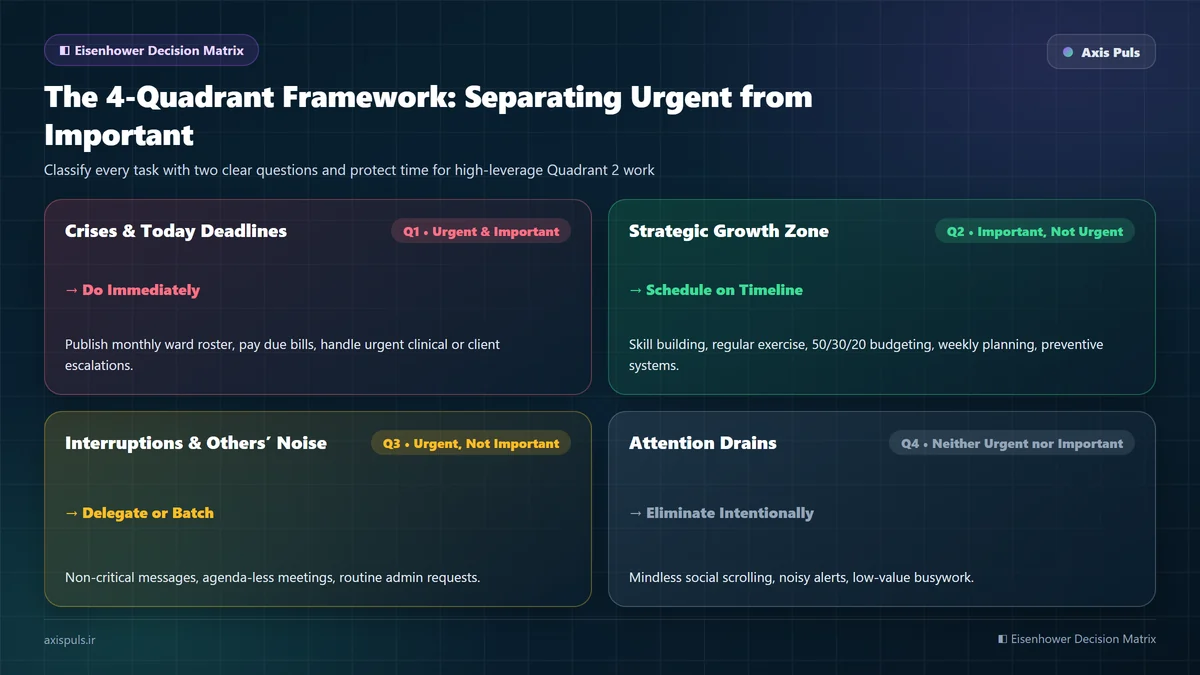
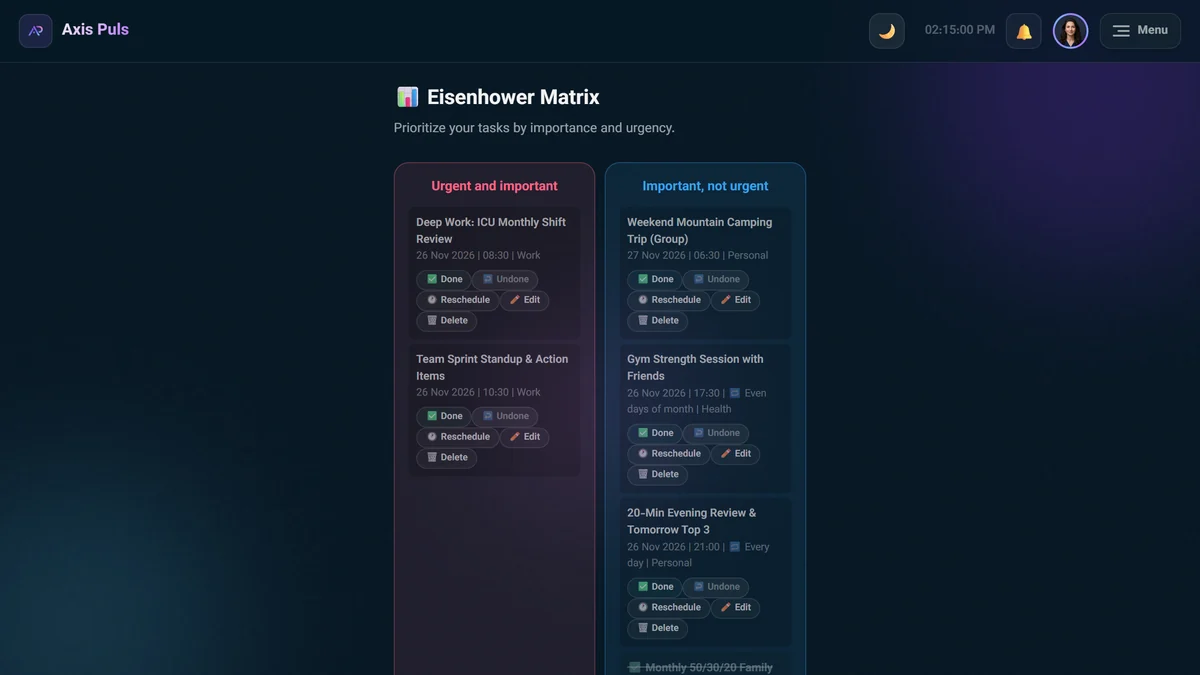
- Separating truly 'important' work from merely 'loud and urgent' pings with the Eisenhower Matrix prevents exhausted, unproductive evenings.
- When you fall behind, never double tomorrow's list—prune low-impact tasks and restart momentum with a single 5-minute action.
- Keeping daily tasks, meetings, and shifts on one timeline eliminates scattered sticky notes and buried chat reminders.
Interactive Task Prioritization & Scheduling Tool
Put prioritization methods into practice right now: rank tasks by priority, assign time blocks without overlap, and save to your account.
Live preview of your schedule
Why Most Plans Collapse by Wednesday (And What Actually Fixes It)
Busy days rarely fail from too little time—they fail when noisy interruptions hijack quiet, high-value work. Mastering task prioritization means choosing your highest-leverage outcomes before opening your inbox.
If you have ever bought a fresh notebook or tried three productivity apps only to abandon them four days later, willpower is rarely the culprit—optimism bias is. Most people plan for an imaginary Tuesday with zero surprise calls, traffic delays, low-energy afternoons, or changing working hours. The moment one 10 a.m. interruption hits, a tightly packed schedule shatters and guilt pushes you to give up on the rest of the day.
Real-world schedules survive when they leave roughly 20% buffer room from the start. Inside the Axis Puls personal planner, narrowing focus to the dedicated 'Today' view instead of staring at a 40-item backlog immediately lowers cognitive friction so you can execute.
Side-by-Side Comparison: Prioritization & Planning Approaches
Not every checkmark carries equal weight—finishing ten minor errands while avoiding the one milestone that moves your week forward creates fake productivity. Pairing the Eisenhower Matrix with visual timeline slots ensures your sharpest morning energy goes to high-impact priorities first.
| Eisenhower Quadrant | Quick Diagnostic Signal | Right Practical Action | Everyday Example |
|---|---|---|---|
| 1. Urgent & Important | Real deadline today with clear consequences | Do first during your peak focus block | Finalizing a ward roster, urgent client fix, medical errand |
| 2. Important, Not Urgent | Compounds long-term growth and prevents future crises | Schedule a protected slot on your timeline | Skill study, exercise, monthly budget check, weekly planning |
| 3. Urgent, Less Important | Noisy pings driven by other people's impulsiveness | Batch into a short window or delegate cleanly | Non-critical chat notifications, agenda-free status calls |
| 4. Neither Urgent nor Important | Pure distraction disguised as busywork | Drop intentionally without guilt | Mindless mid-work social scrolling or tweaking folder colors |
A Practical 4-Step Reset When You Fall Behind Schedule
The most underrated skill in daily planning and weekly planning is recovering calmly without self-blame. Whenever an urgent issue or group planning change eats two hours of your afternoon, resist rolling ten unfinished items blindly onto tomorrow—ruthlessly drop low-value tasks first.
- Pick at most 3 non-negotiable outcomes for today and relegate everything else to secondary status.
- Give each core task a realistic window using time-blocking with short breathing room in between.
- For team meetings, attach a clear goal, hard stop time, and smart checklist of action owners.
- When procrastinating after a delay, use the 5-minute rule to complete just the opening step of your main task.
Connecting Long-Term Goals, Meetings, and Shift Life
A monthly or annual goal stays a wish until it claims a real 45-minute block on this week's calendar. Spend ten quiet minutes at the start of the week asking: 'Which two concrete steps move my main goal forward before Friday?'—then lock those two blocks onto your timeline like doctor appointments.
For healthcare professionals and shift teams, viewing your next shift, personal priorities, and team collaboration threads under one roof stops you from accidentally booking deep errands right after an exhausting night duty.
| Real User Situation | Common Emotional Trap | Sustainable Practical Response |
|---|---|---|
| Falling behind by mid-afternoon | Doubling tomorrow's workload and burning midnight oil | Prune low-value tasks immediately and rescue 1–2 core items |
| Setting monthly or quarterly goals | Writing vague wishes like 'get organized' with no calendar slot | Break each goal into concrete weekly milestones on your timeline |
| Running meetings or group plans | Open-ended calls with no agenda, owner, or stop time | Attach a 3-bullet agenda, hard end time, and action checklist |
| Choosing planning software | Juggling four complex apps until tool fatigue wins | Keep daily tasks, Eisenhower priority, and shifts in one place |
To connect this workflow with adjacent tools and real examples, explore Personal Planner, Eisenhower Matrix, Time-Blocking, Weekly Planning, Group Planning, Smart Checklists.
❓ Frequently Asked Questions from Real Workflows
Multiply your work focus with accurate prioritization
Sign up for the Axis Puls prioritization system today.
Free test