
- Shared tracking of income and expenses, a joint monthly budget and regular report reviews keep household money visible to everyone so decisions rest on numbers.
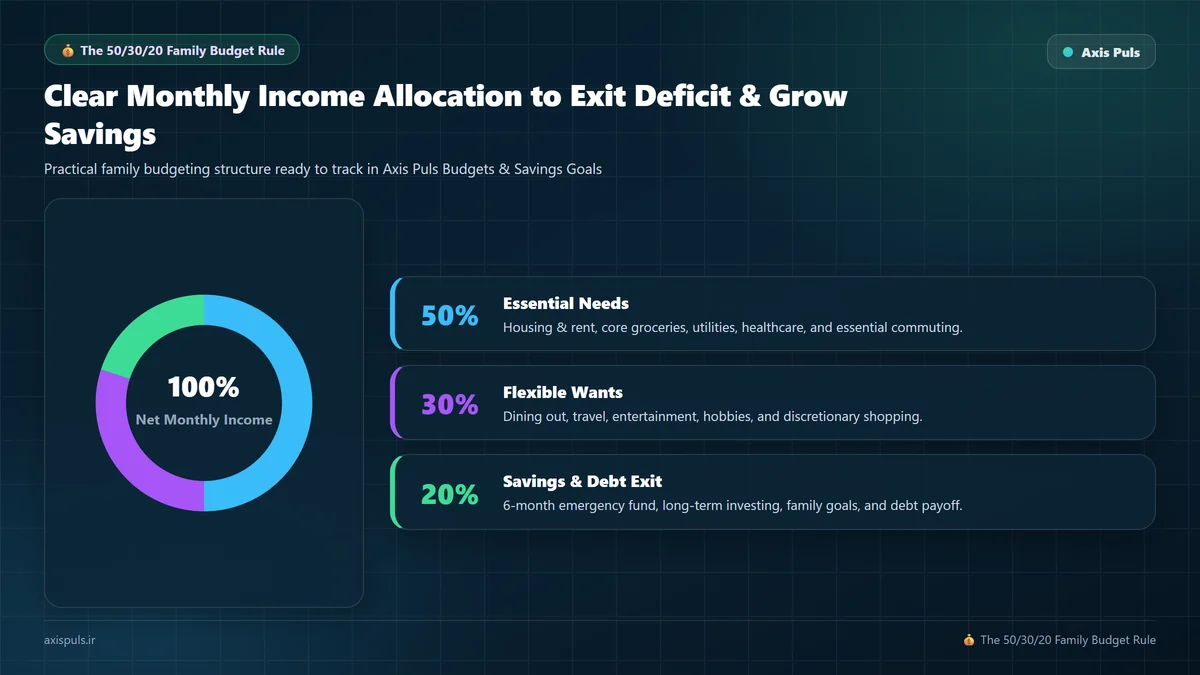
- Start with the 50/30/20 rule: about fifty percent for needs, thirty for wants and twenty for savings and debt, then adjust the shares to your rent and city costs.
- Keep a shared account for joint costs, define each person's share in advance and settle monthly with the same records to reduce repeated disputes.
- This page is a practical guide; the income-and-expense encyclopedia explains concepts while this guide shows hands-on steps with tools.
How to manage family income and expenses?
Asking 'where did my paycheck go?' at month-end usually comes down to invisible daily micro-spending and overly strict budgets that snap by week two. In this 5-minute guide, we set up a realistic, guilt-free system for personal and family money management.
Asking 'where did my paycheck go?' at month-end usually comes down to invisible daily micro-spending and overly strict budgets that snap by week two. In this 5-minute guide, we set up a realistic, guilt-free system for personal and family money management.
How to set a family budget?
A family budget is a numeric agreement on where monthly income goes and with which ceilings. It has three layers: separating fixed costs, capping variable costs from real averages and keeping a separate savings share. The right order matters: fixed, non-deferrable items first, then the savings share, and finally the remainder across variable categories. This order reveals hidden deficits early and keeps decisions realistic. Treat the first month as a trial: keep ceilings slightly wide, focus on complete recording and compare at month-end which categories exceeded guesses.
Fixed costs have a fairly known amount, a known due date and little room for delay: rent, loan installments, tuition, insurance and essential subscriptions. Set them aside at the start of the month. Variable costs fluctuate in amount and frequency and allow more control: home food, restaurants, daily transport, clothing, health and leisure. Agree a monthly ceiling for each variable category and compare weekly with reports. If a category keeps overshooting, revise the ceiling with real averages or find a lower-cost alternative for the same need instead of blame.
| Monthly Household Bucket | Flexible Target Share | Real-World Examples | Stress-Free Control in Axis Puls |
|---|---|---|---|
| Essential Fixed Needs | 50%–60% of baseline income | Rent/mortgage, home groceries, utilities, school, healthcare | Set category budget caps and separate the main bill account |
| Lifestyle & Personal Wants | 20%–30% of baseline income | Dining out, weekend outings, hobbies, kids' pocket money | Guilt-free spending within an agreed monthly ceiling |
| Savings & Named Goals | 15%–20% (paid first on payday) | Emergency buffer, annual trip, appliance upgrade, courses | Track target amount and periodic contributions visually |
| Shared Household Spend | Proportional or 50/50 split | Shared groceries, home repairs, family hosting | Log payer clearly and run a calm 5-minute Sunday check-in |
The 50/30/20 rule in a joint budget
The 50/30/20 rule is a simple starting split: about fifty percent for essential needs, thirty for wants and twenty for savings and debt repayment. Its appeal is simplicity — three large baskets instead of dozens of categories. Yet these percentages are not a fixed prescription for everyone; treat the rule as a compass, not a final verdict. If rent takes a large share in your city, insisting on exactly fifty percent makes the budget unrealistic from day one. Start from real three-month averages: if needs sit near sixty percent, accept it, keep wants temporarily smaller and savings small but regular.
The needs basket covers rent, home food, bills, essential transport, basic education and care. The wants basket covers quality-of-life items that can be scheduled: restaurants, leisure, beyond-need clothing, travel and taste purchases. The savings-and-debt basket covers goal saving and installment repayment. Set a monthly ceiling per basket and sum each category inside its basket.
Instead of designing an elaborate system you abandon by Thursday, spend just three minutes each evening closing open loops and picking tomorrow's top three items inside your personal planner. Small, steady habits beat occasional perfection every time.
Family finance management software
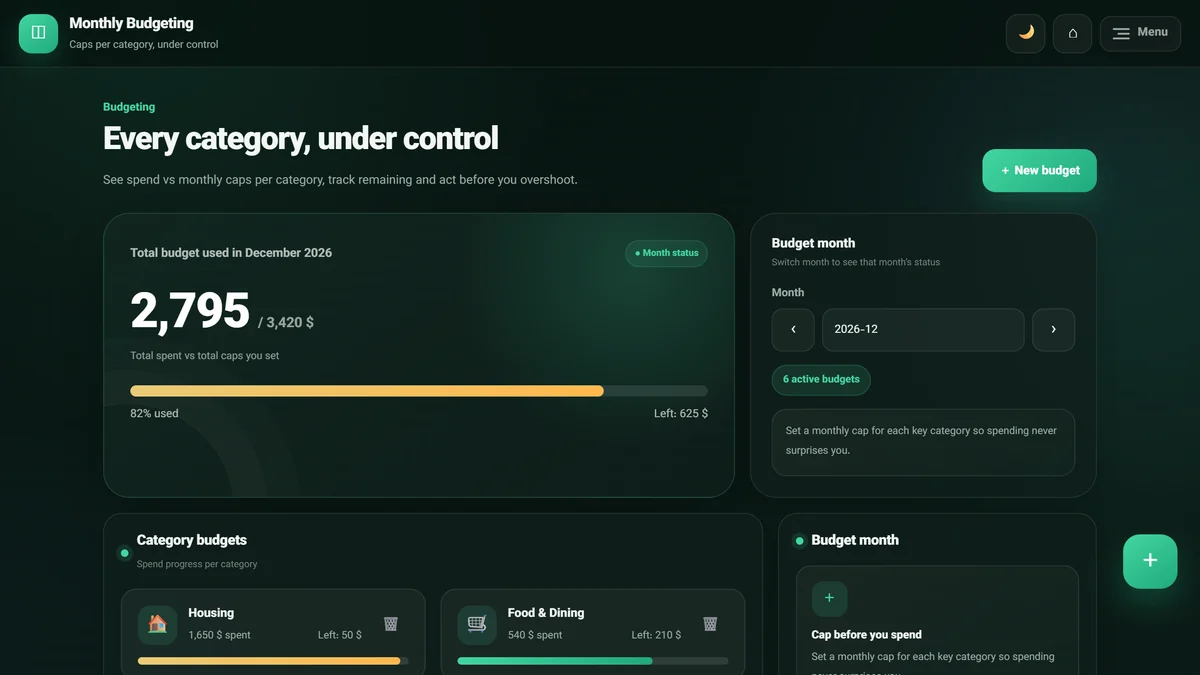
Family finance software keeps entries, ceilings and reports in one structure instead of scattered notebooks and messages. Its usual jobs: income and expense entries by account and category, monthly budgets per category, savings goals with amount and duration, category-based reports and charts, and assistant summaries of patterns. The tool does not replace your decisions; it gives clear numbers while final calls stay with the family. In the Axis Puls finance module this path is implemented with real features: separate bank, wallet, cash and crypto accounts, tidy income and expense categories, active monthly budgets per category and dated savings goals with periodic deposits.
The suggested path has four steps: creating accounts, enabling categories, daily entries and activating budgets. First create three to four accounts: bank for salary and bills, shared for household costs, wallet for online shopping and cash for hand money. Then enable core categories such as food, transport, education, health, leisure and bills, keeping miscellaneous limited. Next record only for two to four weeks with no ceilings to learn real averages. Finally set ceilings from real averages, control spending from the budgets section and review the weekend report in the family meeting.
| Daily Planning Method | Real Practical Strength | Hidden Pitfall | Best Everyday Use Case |
|---|---|---|---|
| Plain Paper To-Do List | Zero friction and satisfying checkmarks | No time slots; urgent trivia crowds out deep work | Top 3 desk priorities for the morning |
| Calendar Slots Only | Clear view of fixed appointments | Treats low-impact errands the same as critical goals | Meetings, classes, and work shifts |
| Timeline + Eisenhower Priority (Axis Puls) | Combines time order in Today view with clear urgency/importance | Takes 30 seconds to tag priority when adding a plan | Busy workdays and rotating shift schedules |
| Weekly Review + Buffer Blocks | Absorbs unexpected delays without derailing the week | Requires a 15-minute weekly reset habit | Balancing career, study, and family life |
To connect this workflow with adjacent tools and real examples, explore Personal Planner, Eisenhower Matrix, Time-Blocking Guide, Weekly Planning, Smart Checklists, Group Planning.
❓ Frequently Asked Questions from Real Workflows
Build your joint family budget this month
Record the first shared transaction, agree per-category ceilings and review the weekend report together.
Start tracking income & expenses