
- Move review forward part by part, daily, so the last night stays a light summary.
- Keep night sleep regular and sufficient; long wakefulness lowers review output.
- Prepare exam-day items the night before so you just grab and go.
- In the session, first scan questions and budget time, then start answering.
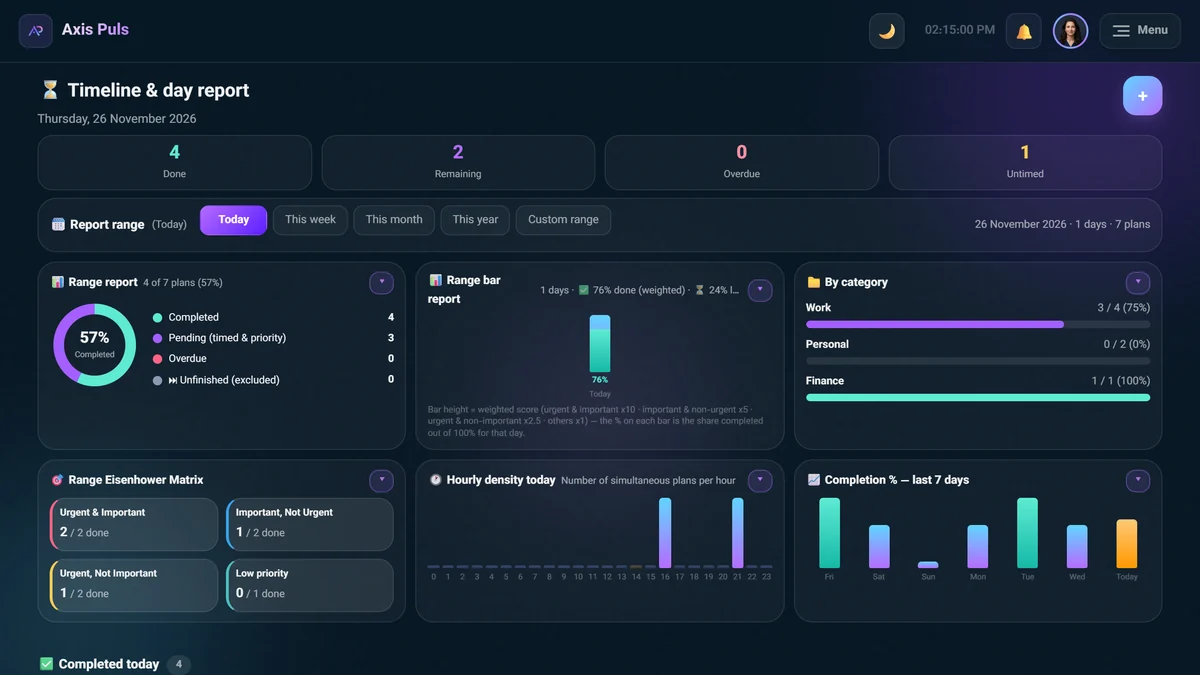
What is an exam checklist and how does it help?
Forgetting a passport, charger, or key project deliverable rarely happens because you don't care—it happens because working memory drops obvious details under time pressure. This 5-minute guide organizes your checklist into calm, timed waves so nothing slips through.
Forgetting a passport, charger, or key project deliverable rarely happens because you don't care—it happens because working memory drops obvious details under time pressure. This 5-minute guide organizes your checklist into calm, timed waves so nothing slips through.
Box one: lesson review
Irregular review is the most common cause of last-night overload. Scattered reading of chapters without goals, highlighting without recall, and never revisiting old notes cost time and build a feeling of lagging behind. The fix is part-by-part review: three clear parts daily, each with a clear goal, plus a short review of the same parts at day end. When volume is split into small units, starting is simpler and continuing is steadier.
A good timing is focused blocks with short breaks; for example 45–50 minutes of study and 10 minutes of rest. In each block move only one lesson or topic forward and keep the phone silent. At the end of each block write three summary lines: what I read, what point mattered, what I will review tomorrow. These lines become the base of next-day review and remove the need for full rereading.
- Start the day with ten minutes of yesterday summary review.
- Move only one clear topic forward per block.
- Write three summary lines after each block.
- Solve a few practice questions daily without looking at answers.
| Daily Planning Method | Real Practical Strength | Hidden Pitfall | Best Everyday Use Case |
|---|---|---|---|
| Plain Paper To-Do List | Zero friction and satisfying checkmarks | No time slots; urgent trivia crowds out deep work | Top 3 desk priorities for the morning |
| Calendar Slots Only | Clear view of fixed appointments | Treats low-impact errands the same as critical goals | Meetings, classes, and work shifts |
| Timeline + Eisenhower Priority (Axis Puls) | Combines time order in Today view with clear urgency/importance | Takes 30 seconds to tag priority when adding a plan | Busy workdays and rotating shift schedules |
| Weekly Review + Buffer Blocks | Absorbs unexpected delays without derailing the week | Requires a 15-minute weekly reset habit | Balancing career, study, and family life |
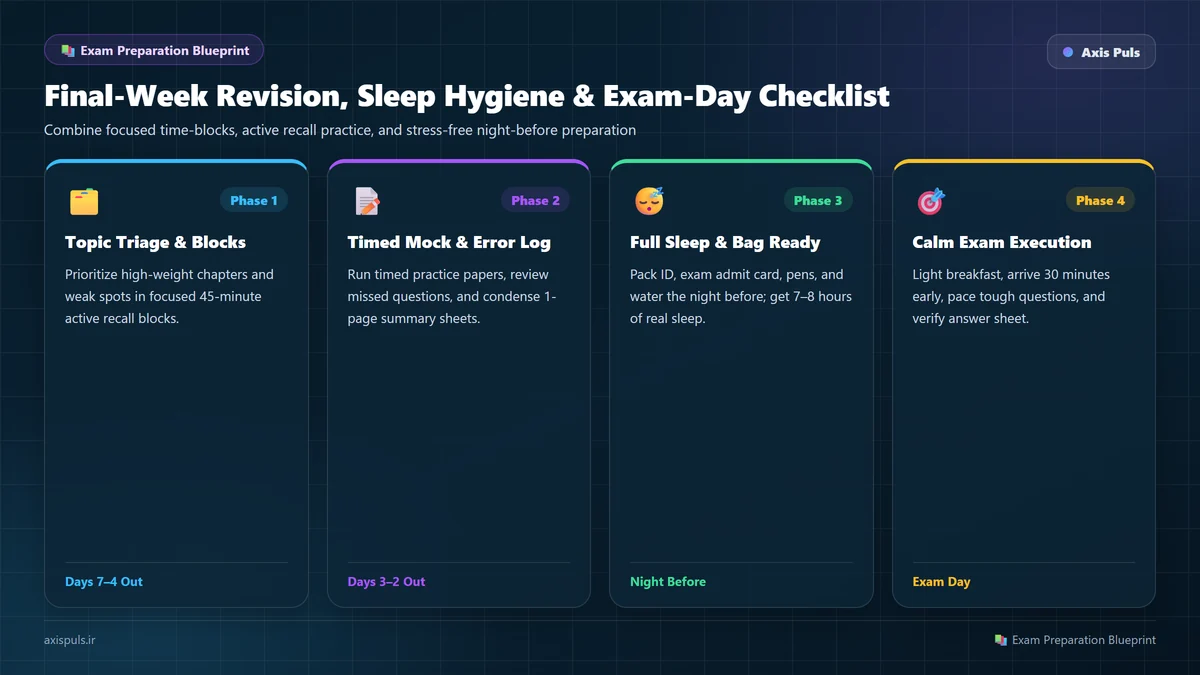
Box three: exam day
Exam day starts the night before, not the session morning. Incomplete items, late arrival and no time plan are the most common causes of a stressful start. This box covers them: night-before preparation, on-time waking, familiar breakfast, earlier arrival, question scanning and answer time budgeting. When arrival is calm, the brain can focus on questions rather than margins.
The most important habit is night-before preparation. Put documents, spare pens, water bottle, allowed light snack and suitable clothes aside and fix the route and move hour. In the morning just wake, eat a familiar breakfast and leave. In the session first quickly scan all questions, answer easy ones first and keep fixed time for hard ones. Keep a few minutes at the end for review.
- Checked session documents and items the night before.
- Prepared spare pens and water bottle.
- Fixed route and move hour with a safety margin.
- Prepared comfortable layered clothes for the hall.
Instead of designing an elaborate system you abandon by Thursday, spend just three minutes each evening closing open loops and picking tomorrow's top three items inside your personal planner. Small, steady habits beat occasional perfection every time.
- Start the day with ten minutes of yesterday summary review.
- Move only one clear topic forward per block.
- Write three summary lines after each block.
- Solve a few practice questions daily without looking at answers.
Practical last-week plan with this template
Treat the last week as a trial, not a competition. Spend the first three days on lagging parts and move three clear parts forward daily. Spend the middle three days on practice and notebook-mistake review, giving half an hour daily to those. Keep the day before the exam light: only summaries and key points, regular sleep and item preparation. On exam day just execute.
Spend ten minutes at each day end reviewing: how many blocks you read, which box scored most ticks, which item was always missed and what should change tomorrow. If you completed just this simple cycle in the last week, the order base is set. Do not raise study intensity in final days; steadiness beats last-minute pressure.
| Preparation Wave | Critical Items & Actions | Common User Mistake | Practical Fix Inside Your Plan |
|---|---|---|---|
| Wave 1: 3–7 Days Ahead | IDs/documents, bookings, essential meds, budget, role split | Packing clothes first and leaving documents to the night before | Pin non-negotiable items at the top of the plan checklist |
| Wave 2: Night Before | Main bag/gear setup, charging devices, home/venue prep | Relying on tired late-night memory | Tick items off one by one as they enter the bag |
| Wave 3: Final 30 Minutes | Keys, phone, bank cards, charger in wall socket, meeting deck | Leaving everyday essentials plugged into the wall | Run a 2-minute doorway scan before stepping out |
| Post-Event Wrap-Up | Settle shared expenses and note missing items for next time | Rebuilding the same list from scratch next month | Reuse your saved plan checklist as a proven template |
An exam checklist is a list of concrete, ordered steps that turns a study week from guesswork into an executable plan. Instead of asking «where do I start?», you scan three boxes: review, sleep and exam day. Moving items from a busy mind to an external list often reduces pre-study anxiety and lowers the chance of postponing tasks. When the next step is exactly clear, starting becomes simpler and fewer days are lost in hesitation.
To connect this workflow with adjacent tools and real examples, explore Personal Planner, Eisenhower Matrix, Time-Blocking Guide, Weekly Planning, Smart Checklists, Group Planning.
❓ Frequently Asked Questions from Real Workflows
Keep this checklist always with you
Save the 27 review, sleep and exam-day items once in Axis Puls and just tick daily; watch each box progress and prepare session items the night before.
Save this checklist in Axis Puls