
- A checklist is a transfer of tasks from the mind's fragile memory to a reliable external system where nothing is lost and stress is halved.
- The formula for making a good checklist is just three words: Short, verbose and orderly.Each item represents a specific next action, and the most critical ones come first.
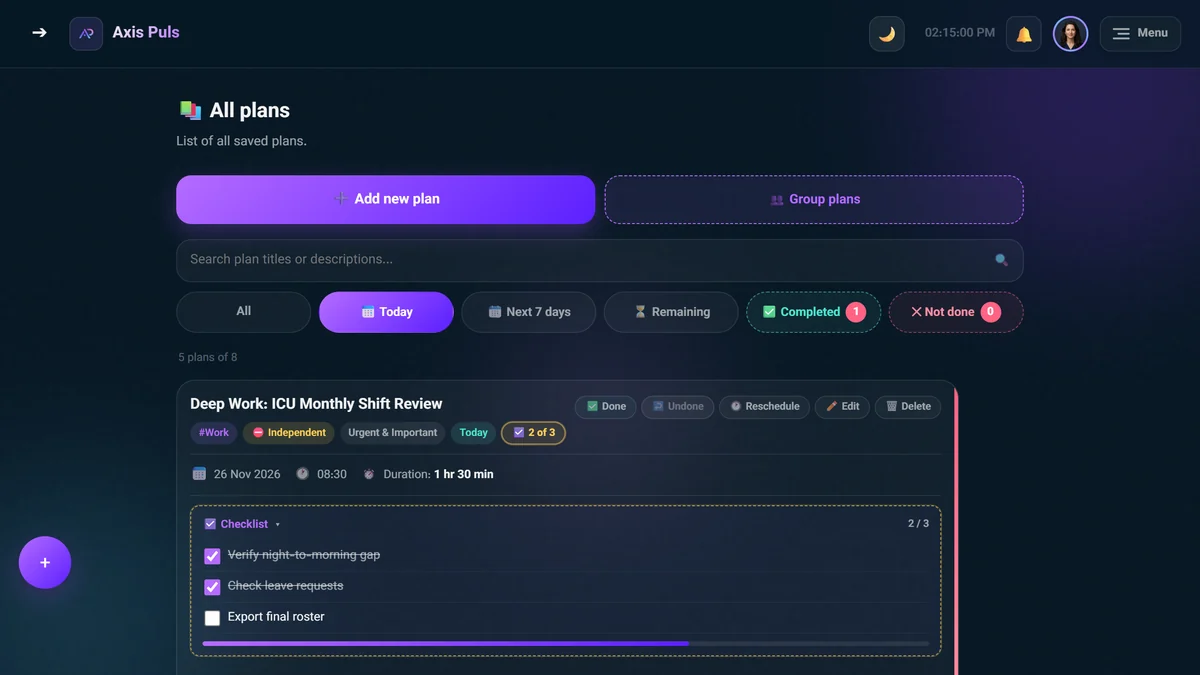
- In Axis Puls each program has a Check the internal list It has, type the item and tap Enter and then tick when it's done so that the list with the same app is stored with the date and reminder.
- This guide has nine full item-by-item templates: Club, travel, camping, meeting, immigration, exams, parties, shopping and projects Which you can save directly to Axis Puls.
What is a checklist, and why does the brain need it?
Forgetting a passport, charger, or key project deliverable rarely happens because you don't care—it happens because working memory drops obvious details under time pressure. This 5-minute guide organizes your checklist into calm, timed waves so nothing slips through.
Forgetting a passport, charger, or key project deliverable rarely happens because you don't care—it happens because working memory drops obvious details under time pressure. This 5-minute guide organizes your checklist into calm, timed waves so nothing slips through.
How to make a checklist?
Making a good checklist is a learning skill that only takes three minutes. Most people go straight to writing items, and this hassle is the root of missing lists. There are six steps to the correct method, which we'll explain with the real example of a three-day trip. The important thing is that these six steps are the same for all templates in this article, so learn once and use it a hundred times.
The first step is to define the mission in a sentence. Write at the top of the list exactly what this checklist ends for, for example, getting ready for a three-day trip north; end: 6:00 a.m. on Thursday. This sentence is the list boundary and prevents unrelated items from being added. Any item that is not related to this sentence is placed on another list.
| Preparation Wave | Critical Items & Actions | Common User Mistake | Practical Fix Inside Your Plan |
|---|---|---|---|
| Wave 1: 3–7 Days Ahead | IDs/documents, bookings, essential meds, budget, role split | Packing clothes first and leaving documents to the night before | Pin non-negotiable items at the top of the plan checklist |
| Wave 2: Night Before | Main bag/gear setup, charging devices, home/venue prep | Relying on tired late-night memory | Tick items off one by one as they enter the bag |
| Wave 3: Final 30 Minutes | Keys, phone, bank cards, charger in wall socket, meeting deck | Leaving everyday essentials plugged into the wall | Run a 2-minute doorway scan before stepping out |
| Post-Event Wrap-Up | Settle shared expenses and note missing items for next time | Rebuilding the same list from scratch next month | Reuse your saved plan checklist as a proven template |
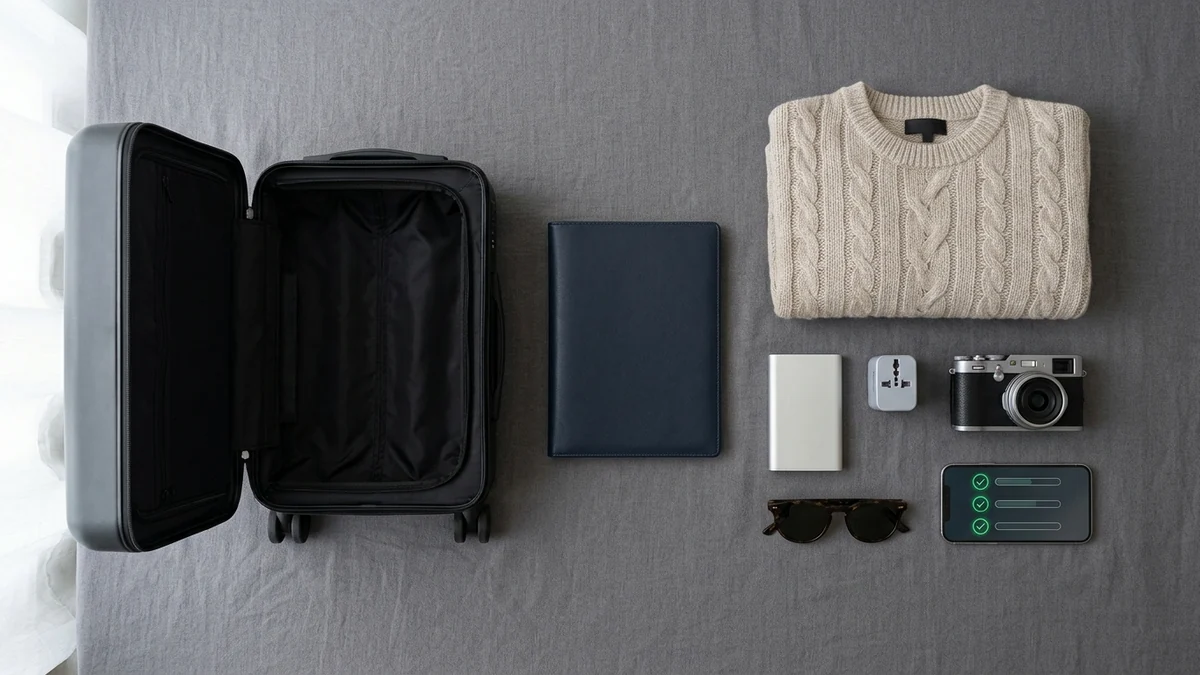
Checklist template for the camp.
Camp is the toughest checklist test because there is no store in nature that compensates for the congestion. If the lights stay, it's dark at night and if the sleeping bag stays, it's not sleeping. That's why professional camping sites close their list in three layers: the survival layer that doesn't ruin the trip, the comfort layer that makes the trip quality, and the group layer that is divided among members.
That's twelve pens, the red line of the camp. The night before the one-on-one move. Open the tent once at home before the trip to make sure the stick and nail are complete. Many camps are broken down because of the faulty tent. Take water at a minimum of three liters per person per day. Take personal medicine and a first aid kit as serious travel documents. In nature, the pharmacy is not nearby.
- □ Test the tent with a full rod, nail, and rope
- □ Take a sleeping bag that suits your nighttime temperature
- □ Keep the insulation to the earth's moisture
- □ Drinking water: at least three liters per person a day
Instead of designing an elaborate system you abandon by Thursday, spend just three minutes each evening closing open loops and picking tomorrow's top three items inside your personal planner. Small, steady habits beat occasional perfection every time.
Collecting. From now on, only three things are important.
If we wanted to summarize this whole long guide into one sentence, that sentence is this: The brain is for thinking, not holding.The sooner you get things from your mind to the system, the more relaxed and efficient you are. Start today, write down three important things tomorrow, schedule them, and see their ticks tomorrow night. Then you can take one of the nine templates for this article that you need today and save them in Axis Puls. You don't have to run them all together; these two small steps are the start of a big system.
Log in to Axis Puls right now and create your first checklist; it's a text-only entry and it's quick. 👉 The entrance to Axis Puls Or 👉 Make the first program with a checklist.To see the rest of the guides, I'm confidential. The Hub checklist. Hit and complete your learning path.
| Group Coordination Dimension | Scattered Messenger Group Chats | Structured Group Plan in Axis Puls |
|---|---|---|
| Headcount Confirmation | Vague 'maybe' replies buried under 200 off-topic messages | Clear invite flow with explicit Accept / Decline status |
| Shared Gear & Task Split | Two people buy charcoal while nobody brings the first-aid kit | One shared checklist attached directly to the event |
| Time or Venue Updates | Latecomers miss changes scrolled out of view | Single source of truth for date, time, and plan notes |
| Splitting Shared Costs | Awkward spreadsheet math days after the trip ends | Built-in group expense tracking and simplified settlement |
To connect this workflow with adjacent tools and real examples, explore Personal Planner, Eisenhower Matrix, Time-Blocking Guide, Weekly Planning, Smart Checklists, Group Planning.
❓ Frequently Asked Questions from Real Workflows
A check is a list of specific actions in logical and square-tick order. To create it, write the first mission in a sentence, then empty the mind for five minutes and break each sentence into a functional action. At the end, put the three critical items first and review the list once. In Axis Puls, write the same items into each program and enter to save the date and reminder.
Put down the ceiling of ten items and just call three of them the most important things of the day. Set a time limit for each important thing and do the little things in a cluster. Record the repetitive tasks as a daily routine with a clockwise reminder to make each day ready.
It has three waves: documents and money from a week ago, homework from the night before and a briefcase on the day of travel. Documents, tickets, medicines and emergency cash are the most important items and they have to take a tick first.