
- A travel checklist moves everything from fragile memory to an external tickable system, so the chance of forgetting documents, medicine and chargers drops noticeably.
- This template has 30 real items with checkboxes in five groups: documents, clothes, hygiene, money and digital, plus home and departure-day tasks.
- The suggested method has three waves: documents and money a few days before, suitcase and home the night before, and hand luggage on departure morning.
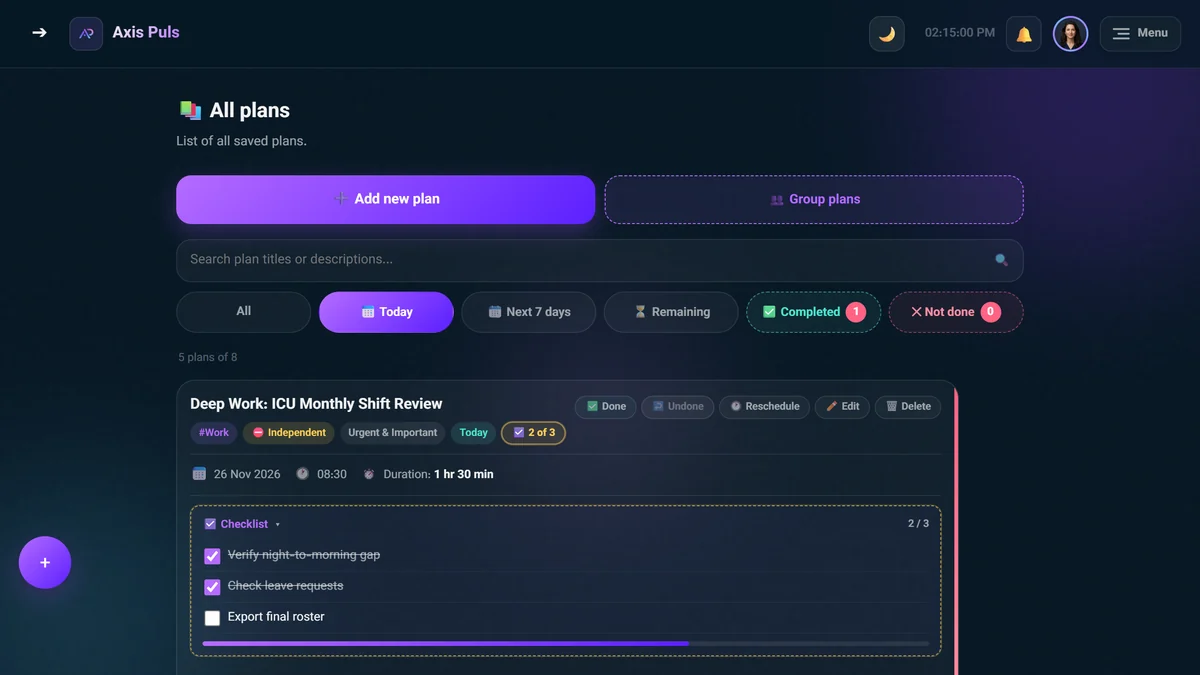
- You can save the same list in Axis Puls inside one plan with date and reminder, then tick items as you pack.
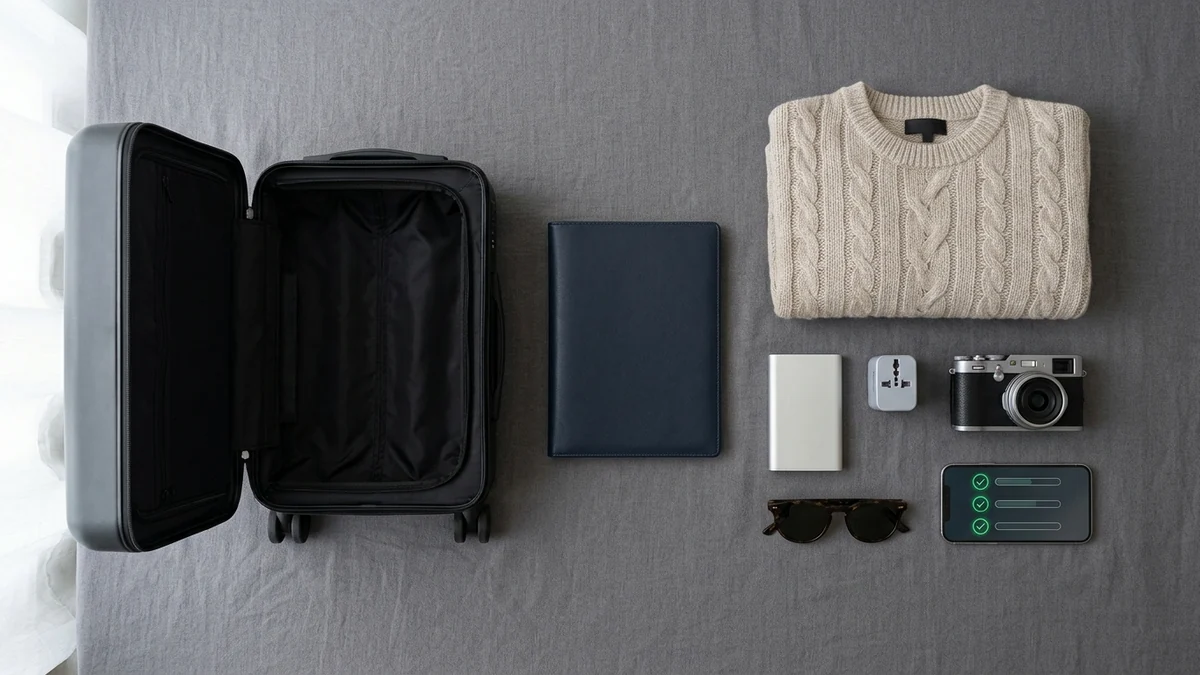
Why you need a travel checklist
Forgetting a passport, charger, or key project deliverable rarely happens because you don't care—it happens because working memory drops obvious details under time pressure. This 5-minute guide organizes your checklist into calm, timed waves so nothing slips through.
Forgetting a passport, charger, or key project deliverable rarely happens because you don't care—it happens because working memory drops obvious details under time pressure. This 5-minute guide organizes your checklist into calm, timed waves so nothing slips through.
Documents and money: the most important part
Documents are the heart of travel and no shop at the destination sells them. Treat this part as the most serious section and start days before, so an expired or lost item still has time to be fixed. Photograph all key documents and keep them on your phone. Close money matters here too: daily budget, emergency cash and awareness of main costs at the destination. Most travel troubles are either document or money related, so tick these twelve items carefully.
Prepare these seven items days before and review them again the night before. Keep tickets and bookings printed or offline so they stay available without internet.
| Preparation Wave | Critical Items & Actions | Common User Mistake | Practical Fix Inside Your Plan |
|---|---|---|---|
| Wave 1: 3–7 Days Ahead | IDs/documents, bookings, essential meds, budget, role split | Packing clothes first and leaving documents to the night before | Pin non-negotiable items at the top of the plan checklist |
| Wave 2: Night Before | Main bag/gear setup, charging devices, home/venue prep | Relying on tired late-night memory | Tick items off one by one as they enter the bag |
| Wave 3: Final 30 Minutes | Keys, phone, bank cards, charger in wall socket, meeting deck | Leaving everyday essentials plugged into the wall | Run a 2-minute doorway scan before stepping out |
| Post-Event Wrap-Up | Settle shared expenses and note missing items for next time | Rebuilding the same list from scratch next month | Reuse your saved plan checklist as a proven template |
Hygiene, medicine and health on trips
Health on trips deserves care, because access to doctors and pharmacies is not like home. Take this part seriously especially with ongoing conditions, allergies or daily medicine. Carry medicine for all trip days plus two extra days and keep prescriptions with you. Choose small leak-proof hygiene items to keep bags light.
Put these six items in a small separate pouch so they stay reachable.
Instead of designing an elaborate system you abandon by Thursday, spend just three minutes each evening closing open loops and picking tomorrow's top three items inside your personal planner. Small, steady habits beat occasional perfection every time.
Departure day and saving the checklist in Axis Puls
Departure day should only be execution, not thinking. Pack hand luggage the night before and do only three final checks in the morning: documents, medicine and phone. Add time buffers for airport or terminal; about two hours for domestic and three for international trips. Morning rush drains day-one energy. Read these final five items aloud and tick them.
A home left empty for days needs its own checklist. Do these the night before or on departure morning.
| Group Coordination Dimension | Scattered Messenger Group Chats | Structured Group Plan in Axis Puls |
|---|---|---|
| Headcount Confirmation | Vague 'maybe' replies buried under 200 off-topic messages | Clear invite flow with explicit Accept / Decline status |
| Shared Gear & Task Split | Two people buy charcoal while nobody brings the first-aid kit | One shared checklist attached directly to the event |
| Time or Venue Updates | Latecomers miss changes scrolled out of view | Single source of truth for date, time, and plan notes |
| Splitting Shared Costs | Awkward spreadsheet math days after the trip ends | Built-in group expense tracking and simplified settlement |
Travel is a high-error situation for the mind: several tasks at once, excitement, little sleep the night before and pressure from departure time. In such conditions, working memory that normally holds only a few items fills quickly and drops obvious things. That is why even organized people sometimes leave a charger or toothbrush behind. A travel checklist takes the load off the mind and puts every item on one reviewable page. When the list is visible, the brain does not need to store; it just executes and ticks.
Instead of designing an elaborate system you abandon by Thursday, spend just three minutes each evening closing open loops and picking tomorrow's top three items inside your personal planner. Small, steady habits beat occasional perfection every time.
A second benefit is ordering. Without a list, most people start with the suitcase and leave documents for the last moment, while sound logic is the opposite. Documents and money usually have no quick replacement if forgotten, but an extra T-shirt can be bought at the destination. This guide follows that logic with three waves and puts vital items first. Following this one principle, packing documents, medicine and money before clothes, can lower a large part of travel stress.
To connect this workflow with adjacent tools and real examples, explore Personal Planner, Eisenhower Matrix, Time-Blocking Guide, Weekly Planning, Smart Checklists, Group Planning.
❓ Frequently Asked Questions from Real Workflows
A travel checklist usually has five groups: documents and tickets, clothes and luggage, hygiene and medicine, money matters, and digital gear and connectivity. This template has 30 items in those five groups plus home and departure-day tasks. Documents and money are better handled days before, the suitcase the night before, and hand luggage on departure morning.
National ID, return tickets with booking codes, accommodation booking with exact address, travel insurance and prescription medicine with prescriptions are among the most important. Photograph all key documents and keep them on your phone. For international trips, check passport and visa validity and save emergency contacts at the destination.
First list clothes by days and plans, then remove one set; most people pack more than needed. Roll clothes to save space and reduce wrinkles. Keep one spare set and essential medicine in hand luggage, so a delayed suitcase does not become a problem.
Save your travel list today
Put 30 ready items in one plan with departure date and reminder; tick while packing and watch progress.
Save in Axis Puls