- Issue: Manual shift scheduling with text and paper is time-consuming, hard shifts are distributed unfairly, and every change messes up the entire schedule.
- Solution: Principles of fair layout (balanced distribution, sufficient rest, transparency) + rotational pattern + centralized registration of requests + one-time definition of rules.
- Result: Full shift coverage, reduced objections, and a schedule that doesn't have to be rebuilt every time off.
- Axis Puls role: the rules and capacities are defined once and the configuration is done on the same basis and approved by the administrator.
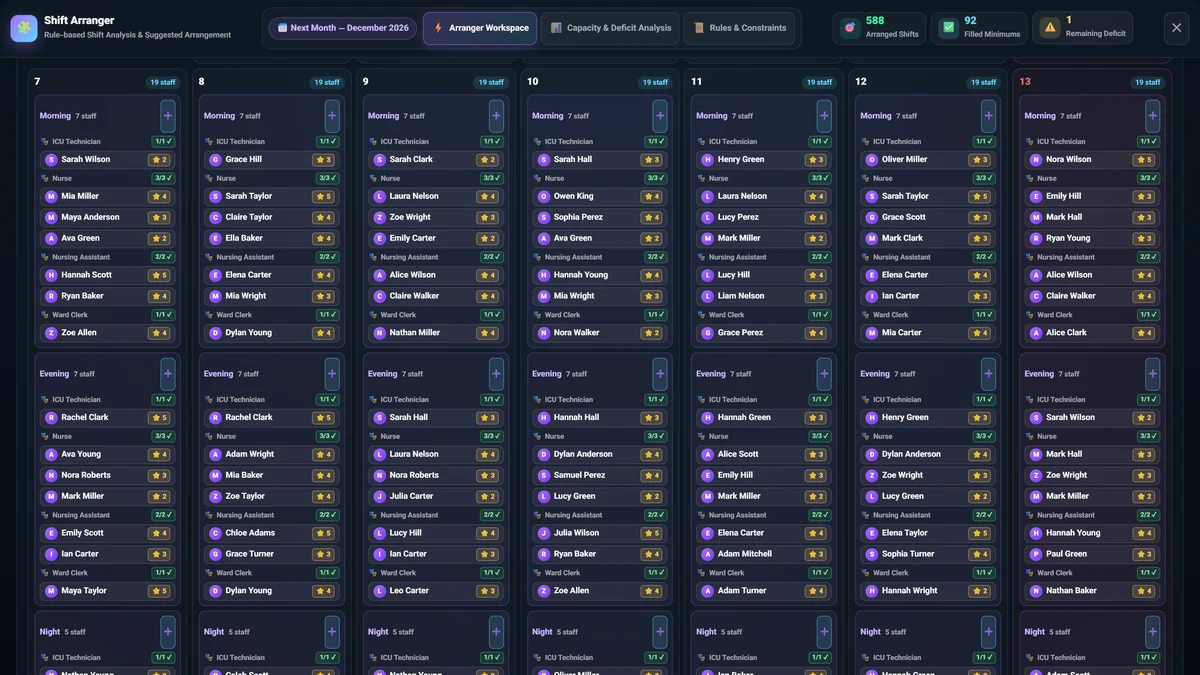
What is shift work and why is it difficult?
Nurse burnout rarely comes from bedside care alone; it compounds when staff cannot predict next week's schedule or get booked into morning shifts right after exhausting nights. Here is how rule-driven scheduling protects recovery windows and keeps workload transparent.
Shift adjustment It means determining which days and shifts (morning, evening, night or combined shifts) each staff member will be at work, in such a way that both the needs of the group are covered and the strength and rights of the staff are respected. This seems simple at first glance, but in practice it involves three simultaneous presses: Continuous coverage (no turn should be left empty), Human Limits (rest, leave, physical strength) and Perceived Justice (The staff must feel that the division of work is fair).
Principles of fair shift arrangement
The fairness of the shift is not just a feeling; It has four columns that can be checked. If your program meets all four, coverage will improve and objections will decrease.
Night shifts, holidays and high-pressure shifts should be distributed among all qualified personnel in a rotating manner so that the pressure is not fixed on the shoulders of a few people.
| Exhausting Manual Pattern | Real Impact on Nurses & Patient Care | Ergonomic Guardrail in Structured Rostering |
|---|---|---|
| Night-to-Morning Quick Returns | Acute sleep debt and higher medication-error risk | Hard 12-hour minimum rest rule between shifts |
| Uneven Night & Holiday Pile-Up | Perceived unfairness, resentment, and staff turnover | Monthly night cap and transparent rotation tracking |
| Last-Minute Roster Publication | Impossible family planning and chronic anxiety | Predictable request window and fast draft generation |
| Phone-Tag Shift Swapping | Constant interruptions for both nurses and head nurses | Rule-checked replacement list inside the workspace |
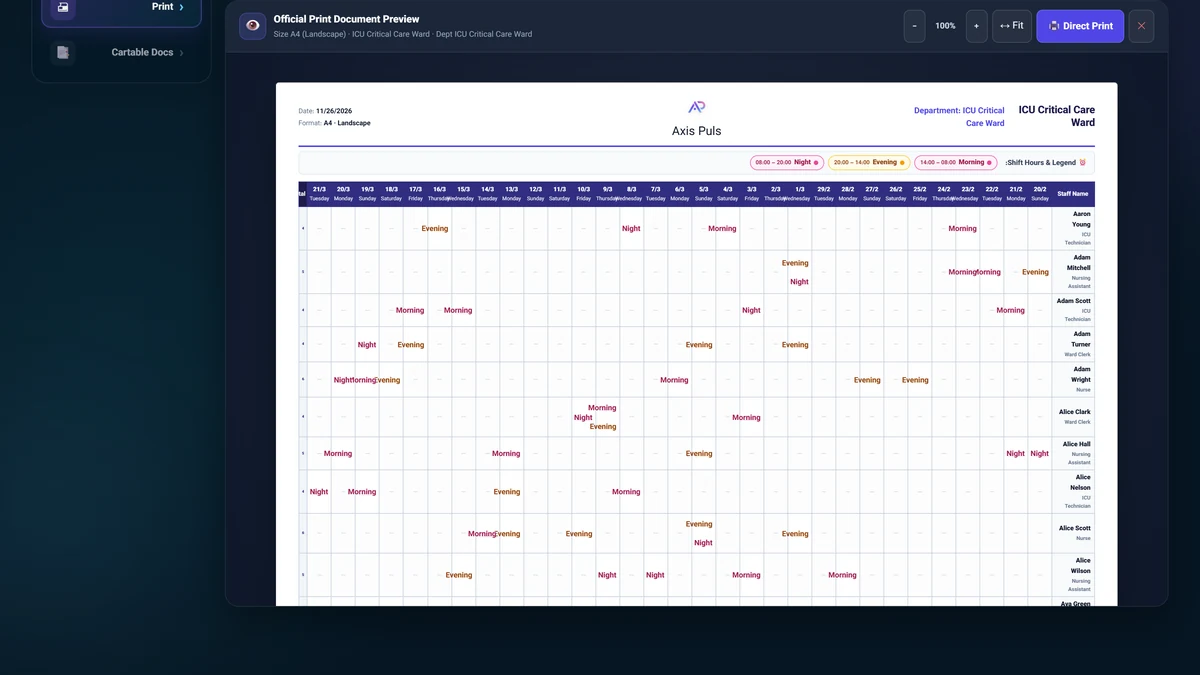
Rotational shift patterns; From two turns to continuous coverage
The rotating pattern means that work shifts rotate between groups periodically. The most common patterns are: Two shifts (morning and evening) for sets with night closure; Three shifts (morning, evening, night) for round-the-clock coverage with three groups; and Four groups For continuous coverage without a break where there is always a break group. The selection of the pattern depends on the hours of activity of the set, the volume of night work and the number of staff, and an inappropriate pattern either creates an empty turn or wears out the staff.
There are two common errors in rotation patterns. First, Quick reverse rotation (at night, then in the evening, then in the morning in a row) which disrupts the rhythm of sleep; Straight rotation with sufficient rest interval is more tolerable. Second, Keeping people steady in a difficult turn on the pretext of satisfaction or habit; Even if a person is a permanent night work volunteer, certain limits and rules should be defined for him so that both his health is preserved and others do not feel discriminated against. Details of time rules and related calculations in the article Working hours read
- Does each group take turns on hard turns?
- Is there enough rest between each person's two consecutive shifts?
- Is the limit of each person's night shifts per month specified and respected?
- Are public holidays distributed on a rotational basis?
System From manual table to regular setting with Axis Puls
The difference between a simple table and a shift management system is in one sentence: the table only tells who works where and when; The system manages the entire chain—structure, rules, roles, capacities, requests, deployment, approval, changes, and reporting—in one cohesive path. in Axis Puls "the rule is defined once, but re-enforced every month"; This means that the manager does not have to remember and control all the restrictions every month.
Two trust-building features complete this path. First, if it is not possible to complete a shift under the defined conditions, instead of ignoring the law, the system will notify the manager of the same case so that a managerial decision can be made. Second, in cases where the rationale is explainable, it is clear why a person did or did not take a shift and what constraints prevented it. The manager still sets the rules, reviews the output, and makes the final decision; The system only undertakes iterative calculations and limits control. To begin with, collections can use the system on a trial basis for two months in real conditions and then make a decision based on their own experience.
| Mid-Month Change Scenario | What Happens via Phone & Paper | Structured Leave & Replacement Flow |
|---|---|---|
| Sudden sick call before a shift | Frantic phone calls to every off-duty nurse | Instant list of eligible staff matching role, rest, and hour caps |
| Planned leave for next month | Paper slip forgotten while building the Excel sheet | Logged ahead of scheduling and respected automatically |
| Peer-to-peer shift swap | Informal trade that accidentally triggers a night-to-morning violation | Rule & cap validation on both colleagues before head-nurse approval |
| End-of-month reconciliation | Wall printout no longer matches actual shifts worked | Single live schedule with full change history |
To connect this workflow with adjacent tools and real examples, explore Live Shift Arranger Demo, Nurse Shift Guide, Head Nurse Software, Matron Oversight Guide.
❓ Frequently Asked Questions from Real Workflows
Define the rules once; Manage every month
Try for two months in the real conditions of your collection and then decide.
Start of trial periodOr test a simulated ward right now without signing up in the Live Interactive Shift Arranger Demo.