
- Over 58% of nurses experience severe burnout symptoms during their careers.
- The root cause is non-ergonomic consecutive shifts, broken rest, and no control over one's own schedule.
- Smart platforms like Axis Puls triple job satisfaction with standard shift rotations, biological-sleep respect and self-service swaps.
The global burnout crisis among clinicians
Nurse burnout rarely comes from bedside care alone; it compounds when staff cannot predict next week's schedule or get booked into morning shifts right after exhausting nights. Here is how rule-driven scheduling protects recovery windows and keeps workload transparent.
Nurse burnout rarely comes from bedside care alone; it compounds when staff cannot predict next week's schedule or get booked into morning shifts right after exhausting nights. Here is how rule-driven scheduling protects recovery windows and keeps workload transparent.
Structural factors in traditional scheduling that burn staff out
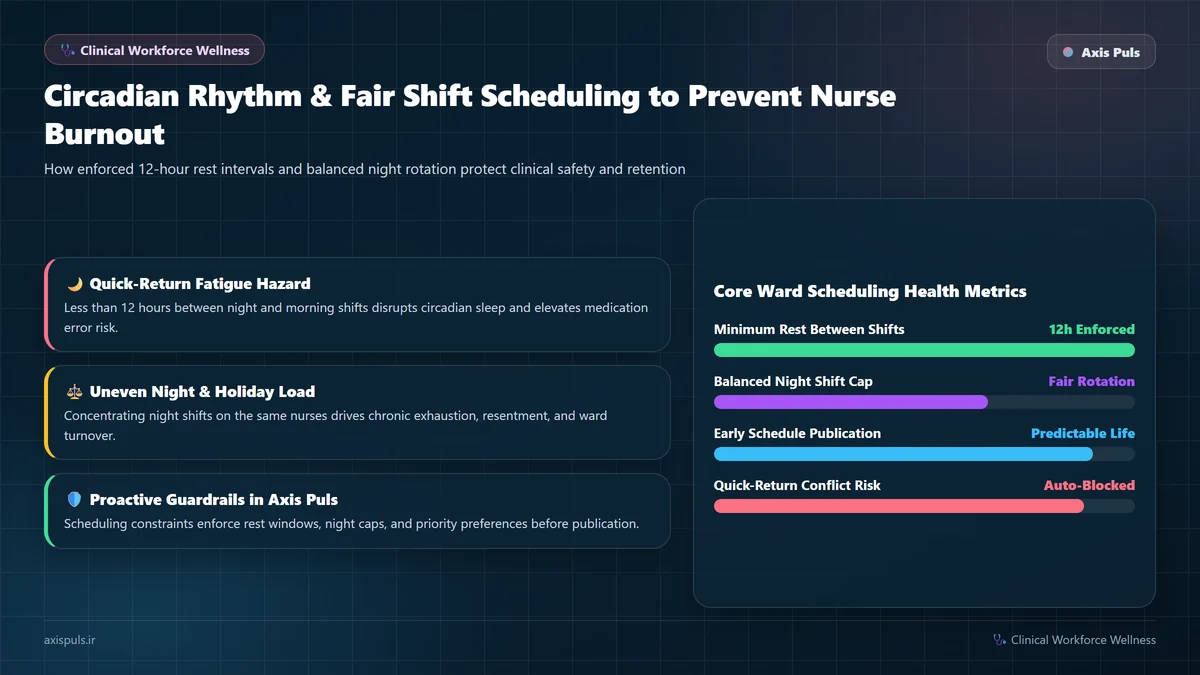
One of the worst common patterns in manual planning is a morning shift right after a night or evening. When less than 12 hours separate shifts, physiological sleep vanishes and fatigue compounds.
In hand-built Excel rotas, some staff repeatedly land holiday nights or weekends. This perceived favoritism and opacity breeds hidden anger and deep dissatisfaction.
| Exhausting Manual Pattern | Real Impact on Nurses & Patient Care | Ergonomic Guardrail in Structured Rostering |
|---|---|---|
| Night-to-Morning Quick Returns | Acute sleep debt and higher medication-error risk | Hard 12-hour minimum rest rule between shifts |
| Uneven Night & Holiday Pile-Up | Perceived unfairness, resentment, and staff turnover | Monthly night cap and transparent rotation tracking |
| Last-Minute Roster Publication | Impossible family planning and chronic anxiety | Predictable request window and fast draft generation |
| Phone-Tag Shift Swapping | Constant interruptions for both nurses and head nurses | Rule-checked replacement list inside the workspace |
Why staff independence and work-life balance matter
One of the greatest wins of the Axis Puls self-service system is giving control back to staff. When a nurse can, from a mobile app:
They regain a sense of control over their career destiny — the strongest antidote to burnout.
- Transparently view next month's shifts two weeks ahead.
- File a swap request with a colleague in seconds, with no manager friction.
- Track leave requests with real-time approval status.
- Transparently view next month's shifts two weeks ahead.
- File a swap request with a colleague in seconds, with no manager friction.
- Track leave requests with real-time approval status.
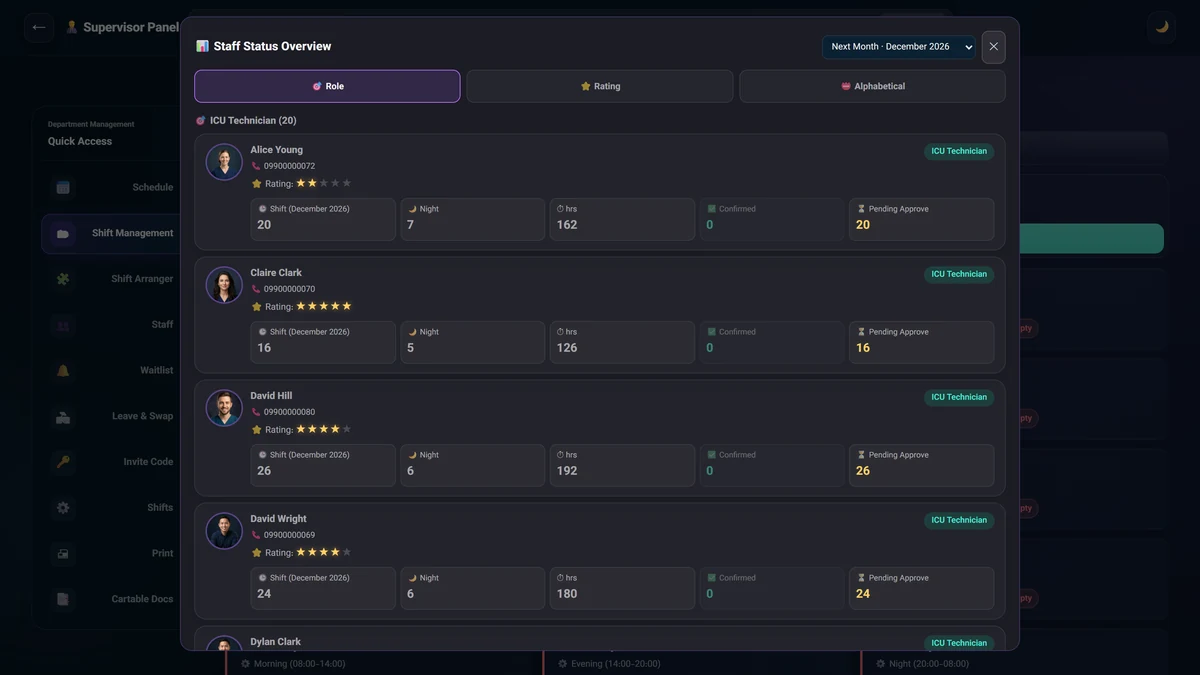
- Guaranteed 24-hour recovery after night shifts: the system never allows shifts inside the rest window.
- Forward-rotating shifts: the physiologically standard morning → evening → night rotation, never reversed.
- Monthly night-shift caps: no one is stacked beyond the allowed nights.
- Smart holiday distribution: everyone equally enjoys public holidays.
- Transparently view next month's shifts two weeks ahead.
- File a swap request with a colleague in seconds, with no manager friction.
- Track leave requests with real-time approval status.
A personal recovery protocol for shift nurses
Even with the best rota, night shifts are inherently erosive. What separates nurses who stay healthy on shifts for a decade from those who burn out in three years is usually these personal recovery protocols — things no system does for you, though a good one can remind you of them.
Seven to nine hours of sleep in a dark, cool, quiet room is non-negotiable. Phone on do-not-disturb, blackout curtains, and telling the family these are "deep sleep" hours, not "rest". Sleep research shows even one phone call mid-day-sleep halves recovery quality.
| Mid-Month Change Scenario | What Happens via Phone & Paper | Structured Leave & Replacement Flow |
|---|---|---|
| Sudden sick call before a shift | Frantic phone calls to every off-duty nurse | Instant list of eligible staff matching role, rest, and hour caps |
| Planned leave for next month | Paper slip forgotten while building the Excel sheet | Logged ahead of scheduling and respected automatically |
| Peer-to-peer shift swap | Informal trade that accidentally triggers a night-to-morning violation | Rule & cap validation on both colleagues before head-nurse approval |
| End-of-month reconciliation | Wall printout no longer matches actual shifts worked | Single live schedule with full change history |
Nursing is one of the world's most beautiful — and most stressful — professions. Yet every year thousands of experienced nurses leave hospitals from extreme mental and physical exhaustion. Burnout is not simple after-work tiredness; it is a deep emotional exhaustion paired with helplessness, cynicism about the workplace and a steep drop in care quality.
International research shows one of the main roots is not clinical work itself but poor time management and bad scheduling.
When the rota keeps shifting and staff cannot plan personal life, family or studies, chronic anxiety sets in.
Supervisors buried under paper piles and chat messages simply forget legitimate staff leave requests.
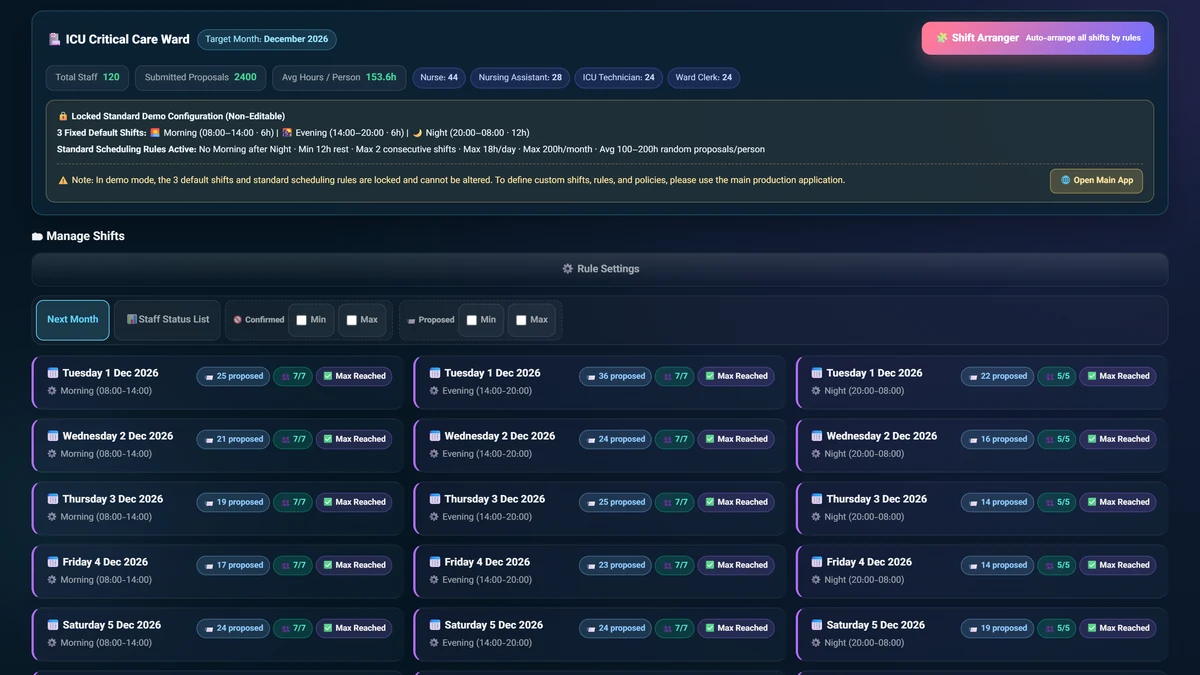
Modern platforms like Axis Puls shift management transform the process by enforcing scheduling ergonomics:
Replacing one experienced nurse who quits from burnout costs, on average, 6 to 9 months of their salary in hiring and training. Hospitals using smart scheduling algorithms report up to 40% less desire to quit and 65% fewer sudden sick absences.
Burnout cannot be managed by feel; it must be numbered. Three simple indicators any head nurse can track monthly paint an accurate picture of team health. First, sick-absence rate: a sudden rise in one ward is an alarm bell, not laziness. Second, swap-request density: when monthly shift-swap requests double, the rota no longer fits staff's real lives. Third, accumulated overtime per person: overtime concentrated on the same few people is the fastest road to burning them out.
Instead of waiting for resignations, supervisors should see these three numbers monthly. In smart systems they are computed automatically, flagging anyone crossing a threshold (e.g., three back-to-back nights or 60 overtime hours a month). That means intervening before collapse, not after it.
Numbers are not everything. An anonymous three-question month-end survey (schedule fairness 1–5, fatigue level, one open suggestion) yields qualitative data no algorithm produces alone. Hard data plus honest opinions give the sharpest picture.
Burnout is not a sudden event; it is a gradual process with measurable symptoms. A hospital spending just 15 minutes a month reviewing these three metrics typically spots workforce crises months earlier — and prevents a costly resignation with one small rota fix.
To connect this workflow with adjacent tools and real examples, explore Live Shift Arranger Demo, Nurse Shift Guide, Head Nurse Software, Matron Oversight Guide, Clinical Productivity Law, Excel vs. Shift Software.
❓ Frequently Asked Questions from Real Workflows
Build a healthy, energized workplace for your clinicians
Deploy the Axis Puls smart shift management system and gift your wards calm, fairness and vitality.
Start using Axis Puls freeOr test a simulated ward right now without signing up in the Live Interactive Shift Arranger Demo.
Disclaimer: this article is educational content on occupational health and is not a substitute for specialist psychiatric diagnosis or treatment.
Sources
- World Health Organization — Burn-out as an occupational phenomenon (ICD-11): who.int — ICD-11 burn-out
- Specialist productivity & AI blog
- Shift-nurse guide
- Working hours & overtime