- Issue: The rotating shift disrupts sleep, family schedule, and salary tracking.
- Solution: Sleep order after night, energy management in shift, personal record of financial performance and written record of requests and transfers.
- Important principle: Any agreement that is not registered will be disputed at the end of the month. A written agreement protects you.
- Role of Axis Puls: the program and its changes are made available to the nurse and requests are registered and tracked in the same system.

The life of a shift nurse; Three fronts at the same time
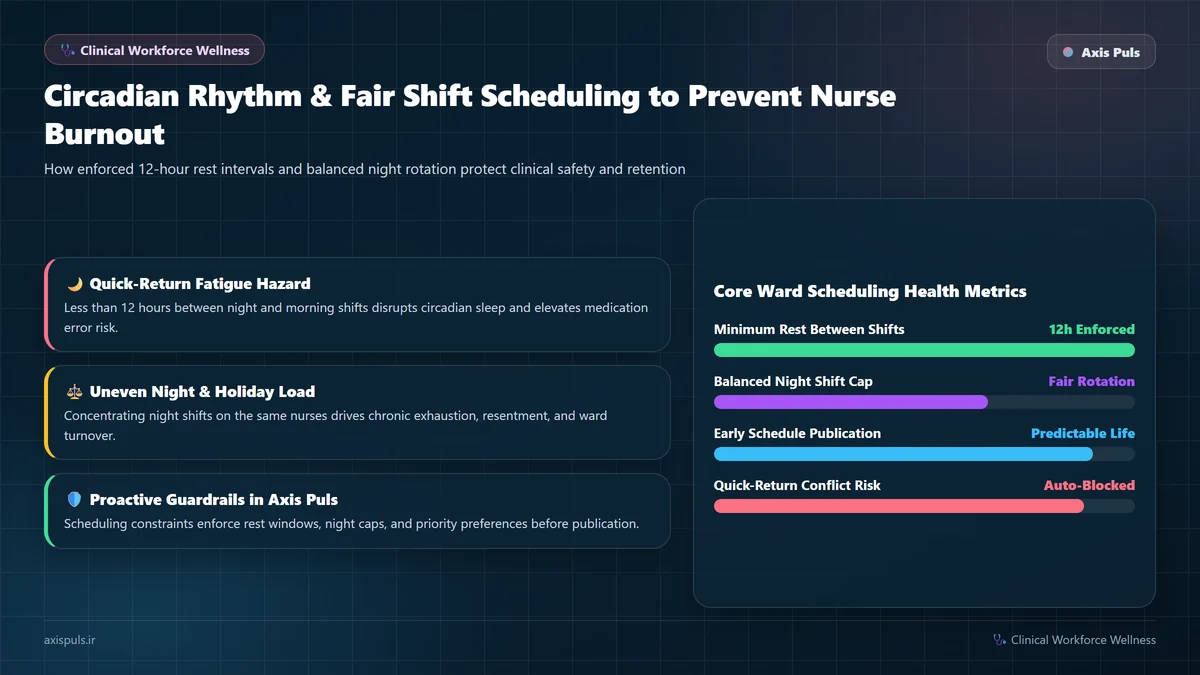
Nurse burnout rarely comes from bedside care alone; it compounds when staff cannot predict next week's schedule or get booked into morning shifts right after exhausting nights. Here is how rule-driven scheduling protects recovery windows and keeps workload transparent.
Life the nurse A shift is happening on three fronts at the same time: the body (Irregular sleep and energy), Family and personal life (a program that changes every month) and pocket (Karaneh, overtime and night, which must be counted correctly). Most of the mental pressure of nurses is not due to the difficulty of the work of treatment; from Unpredictability is: not knowing next month's plan, not registering agreements and last minute surprises.
Sleep management after night shift
The most important skill of a shift nurse is to sleep right after night. After a night of waking up, the body is both tired and full of the light and noise of the day; If sleep is delayed or fragmented, recovery remains incomplete and fatigue enters the next shift. Five practical rules are the answer: Sleep immediately (Don't turn off your phone and do housework), Make the room dark and cool (thick curtain and silence), Avoid caffeine at the end of the shift, Keep your bedtime consistent on similar days so that the body gets used to it, and Keep the day after consecutive nights empty And the heavy family schedule.
Second point, Smart nap is: short controlled sleep before the night shift (about one to two hours in the evening) can make the onset of the night more bearable; But the long sleep in the evening spoils the main sleep after the shift. If your department allows short breaks in quiet nights, use those short opportunities to renew your energy; The nurse's body is her main asset, and the accumulated fatigue lowers both your own health and the quality of care.
| Exhausting Manual Pattern | Real Impact on Nurses & Patient Care | Ergonomic Guardrail in Structured Rostering |
|---|---|---|
| Night-to-Morning Quick Returns | Acute sleep debt and higher medication-error risk | Hard 12-hour minimum rest rule between shifts |
| Uneven Night & Holiday Pile-Up | Perceived unfairness, resentment, and staff turnover | Monthly night cap and transparent rotation tracking |
| Last-Minute Roster Publication | Impossible family planning and chronic anxiety | Predictable request window and fast draft generation |
| Phone-Tag Shift Swapping | Constant interruptions for both nurses and head nurses | Rule-checked replacement list inside the workspace |
Energy and time management during shifts
A long shift with an empty stomach and dehydration is a dangerous combination. Three simple habits will keep you energized during your shift: Light and regular meal Instead of a heavy meal in the middle of the shift, enough water Throughout his presence, and Taking short breaks To sit and refresh instead of aimlessly scrolling. Nurses who manage their energy are more accurate at the end of the shift and do not lose their personal life after the shift.
Light, protein and regular meals; Avoiding too much sugar that causes energy loss.
Application registration and transfer; From call to document
A nurse's greatest administrative stress comes from two things: requests that get lost and transfers that go unrecorded. The solution for both is the same: write. Leave request, turn preference and transfer with colleagues always in the official and registered way; The verbal agreement of "you come in my place, we will calculate later" turns into a dispute on the first of the following month.
In Axis Puls the nurse registers his requests in the system: in the method Suggested shift He declares his priorities and in the method desired shift He chooses from among the options allowed by the system. Also request Leave and assignment of shifts It is registered in the same system, eligible people are suggested and after acceptance and approval, the program is updated. And the system is web-based; The nurse logs in through a browser, sees the latest version of the app, and gets built-in notifications for events.
| Mid-Month Change Scenario | What Happens via Phone & Paper | Structured Leave & Replacement Flow |
|---|---|---|
| Sudden sick call before a shift | Frantic phone calls to every off-duty nurse | Instant list of eligible staff matching role, rest, and hour caps |
| Planned leave for next month | Paper slip forgotten while building the Excel sheet | Logged ahead of scheduling and respected automatically |
| Peer-to-peer shift swap | Informal trade that accidentally triggers a night-to-morning violation | Rule & cap validation on both colleagues before head-nurse approval |
| End-of-month reconciliation | Wall printout no longer matches actual shifts worked | Single live schedule with full change history |
The good news is that all three fronts can be managed with "personal order + registration". This article teaches exactly that and explains it in the tone of "according to the product documentation" wherever the system is involved. The management and hospital view of the same issue in the article Nursing shift management read; This is about the nurse herself.
Arriving home → darkening the room → putting away the phone → sleeping immediately and in one piece → waking up with constant alarms → light and light breakfast. Repeat the same simple sequence every time until it becomes a habit.
Adequate water during the shift and limiting caffeine to the first half, not the last hours.
Taking every opportunity allowed to sit and take a short mental recovery.
Do not fill the rest day with overtime; Of, the body's right to recovery.
Personal time management is also the second part of the story: do banking, shopping and administrative follow-ups on the off days after the light shift, not after the night. A personal calendar where shifts and important tasks can be seen side by side prevents interference and forgetfulness.
To connect this workflow with adjacent tools and real examples, explore Live Shift Arranger Demo, Nurse Shift Guide, Head Nurse Software, Matron Oversight Guide, Clinical Productivity Law.
❓ Frequently Asked Questions from Real Workflows
Make your shift schedule clear and trackable
Try for two months in the real conditions of your collection and then decide.
Start of trial periodOr test a simulated ward right now without signing up in the Live Interactive Shift Arranger Demo.