- Problem: Camp gear spreads across memory, scattered messages, and paper scraps, and the result is leaving behind exactly the items you need at night.
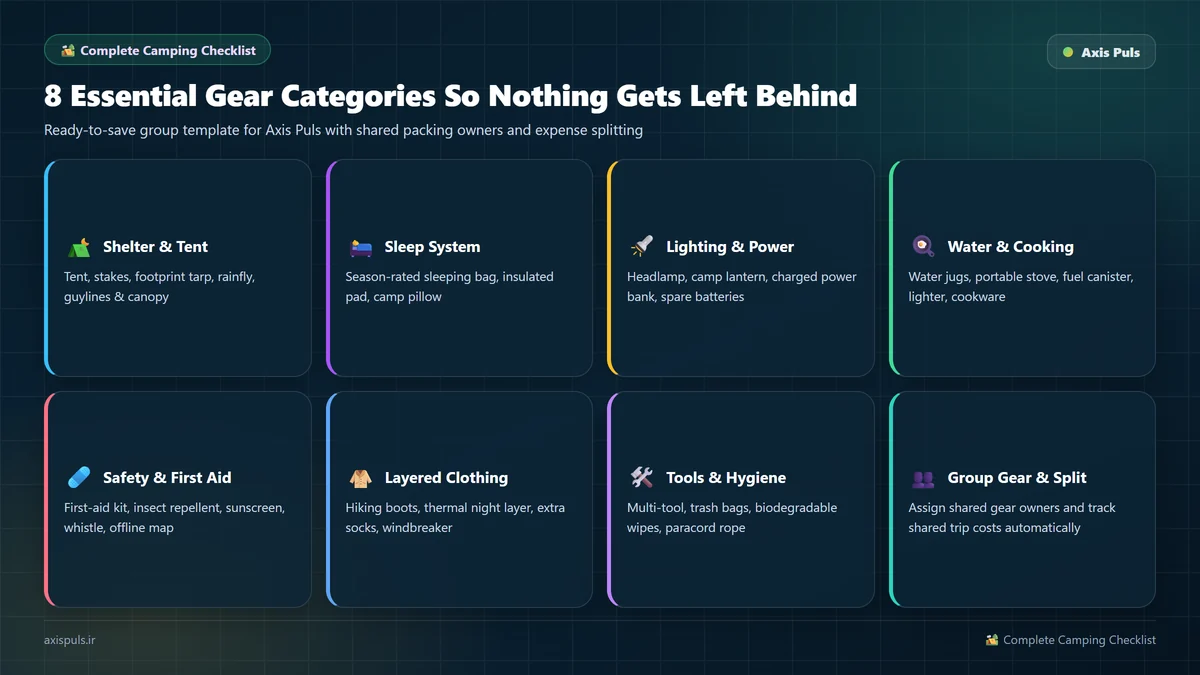
- Template: This page gives eight complete categories: shelter and sleeping, light and energy, water and food, first aid and safety, clothing, navigation and tools, hygiene, and documents.
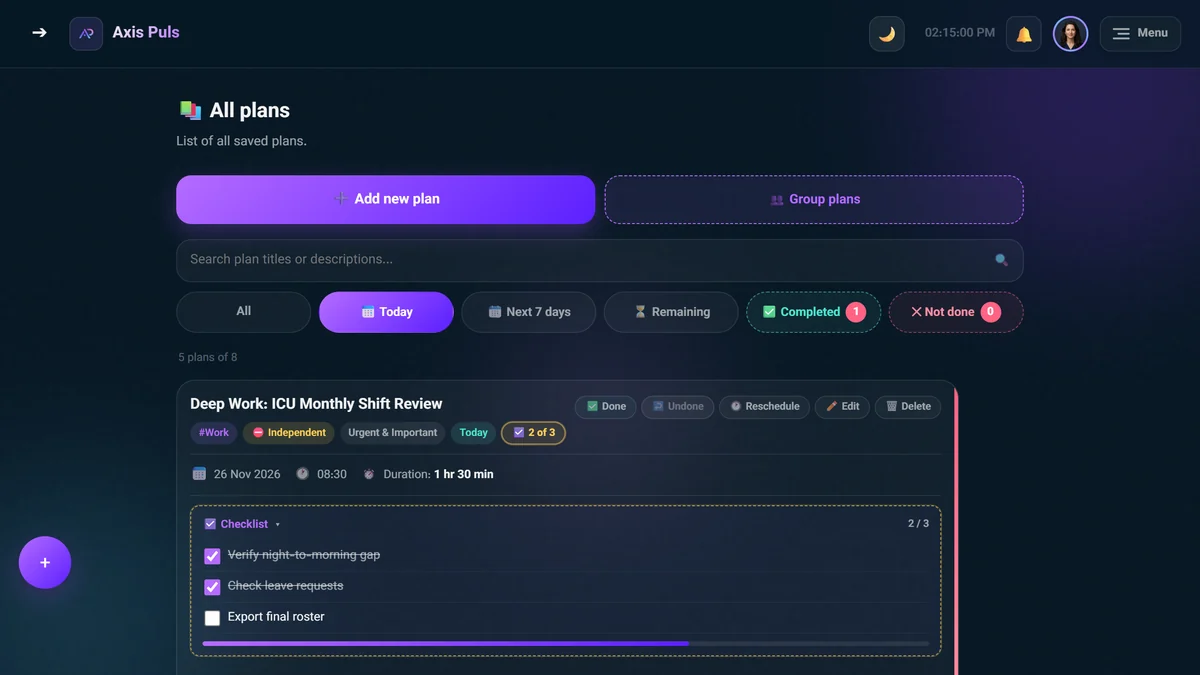
- Saving: Type the items into the checklist of your camp plan in Axis Puls, set a date and reminder, and tick them off while packing.
- Group: For a camp with friends, create a group plan so you share one list and every shared item has exactly one owner.
Why is something always left behind at camp?
Planning sticks when it stays lightweight, flexible, and anchored to real priorities rather than rigid minute-by-minute perfectionism. In this 5-minute guide, build a calm daily and weekly execution system.
Packing for camp is different from packing a city suitcase; in the city a forgotten item is fixed by the corner shop, but out in nature that one missing item becomes the whole story. The problem is usually not inexperience; it is a scattered list. Some gear lives in memory, some in exchanged messages with friends, some on a scrap of paper of unknown location, and some is trusted to a memory that fails under the pressure of departure day. Short-term human memory holds only a few items, and every extra item raises the chance of error; exactly on the busiest day, when you need memory most, it performs worst.
Camp checklist template; Eight categories item by item
This template is arranged so you can move category by category and tick items off while packing. The first three categories are vital, and if only those are complete your camp is saved; the rest build the quality of the night. Copy each line into your plan checklist as is; cross out items irrelevant to your camp and add anything you need that is missing here to your personal template.
The most forgotten items are usually the obvious ones: power bank, personal medication, trash bags, extra warm clothing, and lighters. Professionals are not embarrassed to write down the obvious; one extra line costs nothing, but one forgotten item can ruin the whole night.
- Open the tent, close it again, and make sure the zips and poles are healthy
- Take the mat or air mattress together with its pump
- Take a sleeping bag suited to the night temperature of the area
- Take an inflatable pillow or a small travel pillow
| Real User Situation | Common Emotional Trap | Sustainable Practical Response |
|---|---|---|
| Falling behind by mid-afternoon | Doubling tomorrow's workload and burning midnight oil | Prune low-value tasks immediately and rescue 1–2 core items |
| Setting monthly or quarterly goals | Writing vague wishes like 'get organized' with no calendar slot | Break each goal into concrete weekly milestones on your timeline |
| Running meetings or group plans | Open-ended calls with no agenda, owner, or stop time | Attach a 3-bullet agenda, hard end time, and action checklist |
| Choosing planning software | Juggling four complex apps until tool fatigue wins | Keep daily tasks, Eisenhower priority, and shifts in one place |
How do I save the camp template in Axis Puls?
In Axis Puls a checklist is not a separate, forgettable place; it lives inside each plan. Open the add plan page, write a title such as Weekend camp, and in the checklist section of that same plan type every template item above and press Enter so it becomes its own row. Because the list is saved together with that plan, the date and reminder of the plan stick to all items; at the set time a notification arrives and the list appears in front of you. While packing, you simply tick items off and watch progress right there.
Enter every template item as its own line so it truly gets ticked while packing.
Night-before review and improving the template
The most important five minutes of the whole camp are the night-before review. Read the complete list aloud once and ask three questions: is anything missing? Is anything extra making the load heavy? Is the packing order right? Most camp omissions surface exactly in this review; you remember the daily medication you never wrote down or the power bank left on charge. This review is the cheapest camp insurance and takes only five minutes.
And the last step: do not throw the finished list away. After returning, sit for two minutes and update the template; add whatever you needed but had not written, and cross out the extras. After two or three camps your template becomes flawless and turns into a personal asset. In Axis Puls previous plans archive themselves, so there is no need to start from zero; open the previous camp template, give it a new date, and change only the varying items. This execute-and-improve cycle is what turns an ordinary list into a professional system.
| Eisenhower Quadrant | Quick Diagnostic Signal | Right Practical Action | Everyday Example |
|---|---|---|---|
| 1. Urgent & Important | Real deadline today with clear consequences | Do first during your peak focus block | Finalizing a ward roster, urgent client fix, medical errand |
| 2. Important, Not Urgent | Compounds long-term growth and prevents future crises | Schedule a protected slot on your timeline | Skill study, exercise, monthly budget check, weekly planning |
| 3. Urgent, Less Important | Noisy pings driven by other people's impulsiveness | Batch into a short window or delegate cleanly | Non-critical chat notifications, agenda-free status calls |
| 4. Neither Urgent nor Important | Pure distraction disguised as busywork | Drop intentionally without guilt | Mindless mid-work social scrolling or tweaking folder colors |
To connect this workflow with adjacent tools and real examples, explore Personal Planner, Eisenhower Matrix, Task Prioritization, Time-Blocking, Weekly Planning, Group Planning.
❓ Frequently Asked Questions from Real Workflows
Start your next camp with a complete list
Save the template in a plan and tick it off calmly the night before departure.
Login and create a camp plan