
- A project checklist moves the path from memory to an external tickable list so no delivery or approval is missed.
- This template has 24 real items with checkboxes in four groups: definition, phased delivery, quality and closure.
- The suggested method is phased delivery: each phase has a defined output, acceptance measure and approval.
- You can save the same list in Axis Puls inside a plan with date and reminder and tick each phase.
What is project definition and scope?
Forgetting a passport, charger, or key project deliverable rarely happens because you don't care—it happens because working memory drops obvious details under time pressure. This 5-minute guide organizes your checklist into calm, timed waves so nothing slips through.
Forgetting a passport, charger, or key project deliverable rarely happens because you don't care—it happens because working memory drops obvious details under time pressure. This 5-minute guide organizes your checklist into calm, timed waves so nothing slips through.
How to define scope and phased schedule?
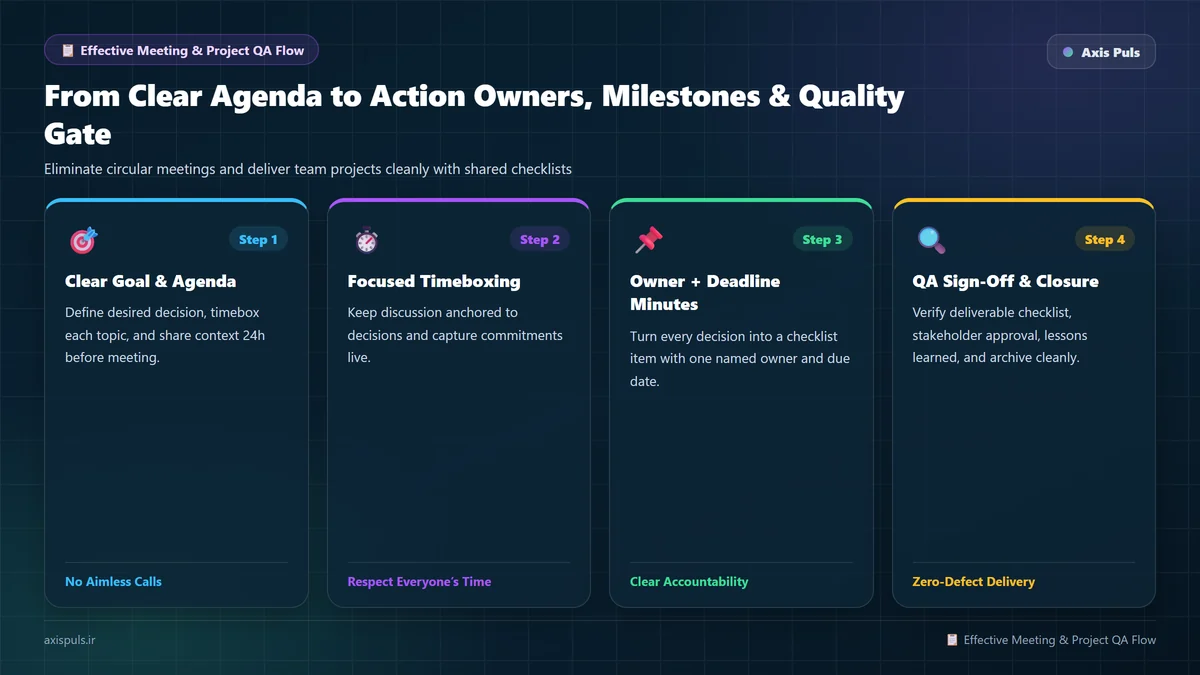
A phased schedule breaks large work into small packs deliverable in one to two weeks, with a review point at the end of each pack. With one large delivery at the end, deviation appears late and correction costs more. With four small deliveries, deviation appears in the first phase and is fixed at low cost. This simple logic is the heart of phased delivery. Break down seriously: each pack needs a clear output, owner and date.
For each pack record three fields: output, acceptance measure and dependency. Output defines what is delivered, acceptance defines when it counts as accepted, and dependency shows links to other packs. When these three are clear, order becomes visible and the critical path appears. The critical path is the chain where delay moves the whole project and needs careful handling. The personal planning hub shows a similar logic for breaking days into blocks.
| Group Coordination Dimension | Scattered Messenger Group Chats | Structured Group Plan in Axis Puls |
|---|---|---|
| Headcount Confirmation | Vague 'maybe' replies buried under 200 off-topic messages | Clear invite flow with explicit Accept / Decline status |
| Shared Gear & Task Split | Two people buy charcoal while nobody brings the first-aid kit | One shared checklist attached directly to the event |
| Time or Venue Updates | Latecomers miss changes scrolled out of view | Single source of truth for date, time, and plan notes |
| Splitting Shared Costs | Awkward spreadsheet math days after the trip ends | Built-in group expense tracking and simplified settlement |
How to control quality and acceptance?
Quality control means checking delivery against pre-written measures rather than moment views. When measures are written before start, judgment stays calm and reasoned. When measures are built at the end, debate turns subjective. For this reason this template stresses writing acceptance before each phase starts. The reviewer must be known in advance. The table below shows sample acceptance for three common delivery types:
Run technical review of each phase with a checklist, item by item. Write issues, fix them and check again. Archive the final version of each phase with a clear name so a wrong version does not become basis. Get written approval for each phase; a short dated message is enough but it needs to be recorded.
Instead of designing an elaborate system you abandon by Thursday, spend just three minutes each evening closing open loops and picking tomorrow's top three items inside your personal planner. Small, steady habits beat occasional perfection every time.
How does the checklist work in Axis Puls?
The real power of this template appears when it moves from the page into your plan and lives with date and reminder. In Axis Puls the checklist is not separate; it lives inside each plan. Build one plan with the project title, set start and milestones, and in the inner checklist enter the same 24 items one by one with Enter. At run time only tick and see progress in the same place. Set hour and day reminders for milestones so they are reviewed on time.
If the project is a team one, use group plans so pack splits stay clear among members. Each member sees the state of their pack and the coordinator sees the whole picture. For repeating project tasks such as weekly reports use weekly repeat routines so the pattern stays ready. Login needs only an SMS code with no password to remember. 👉 Save this 24-item checklist in Axis Puls; build the project plan today, enter 24 items and tick each phase after approval.
| Preparation Wave | Critical Items & Actions | Common User Mistake | Practical Fix Inside Your Plan |
|---|---|---|---|
| Wave 1: 3–7 Days Ahead | IDs/documents, bookings, essential meds, budget, role split | Packing clothes first and leaving documents to the night before | Pin non-negotiable items at the top of the plan checklist |
| Wave 2: Night Before | Main bag/gear setup, charging devices, home/venue prep | Relying on tired late-night memory | Tick items off one by one as they enter the bag |
| Wave 3: Final 30 Minutes | Keys, phone, bank cards, charger in wall socket, meeting deck | Leaving everyday essentials plugged into the wall | Run a 2-minute doorway scan before stepping out |
| Post-Event Wrap-Up | Settle shared expenses and note missing items for next time | Rebuilding the same list from scratch next month | Reuse your saved plan checklist as a proven template |
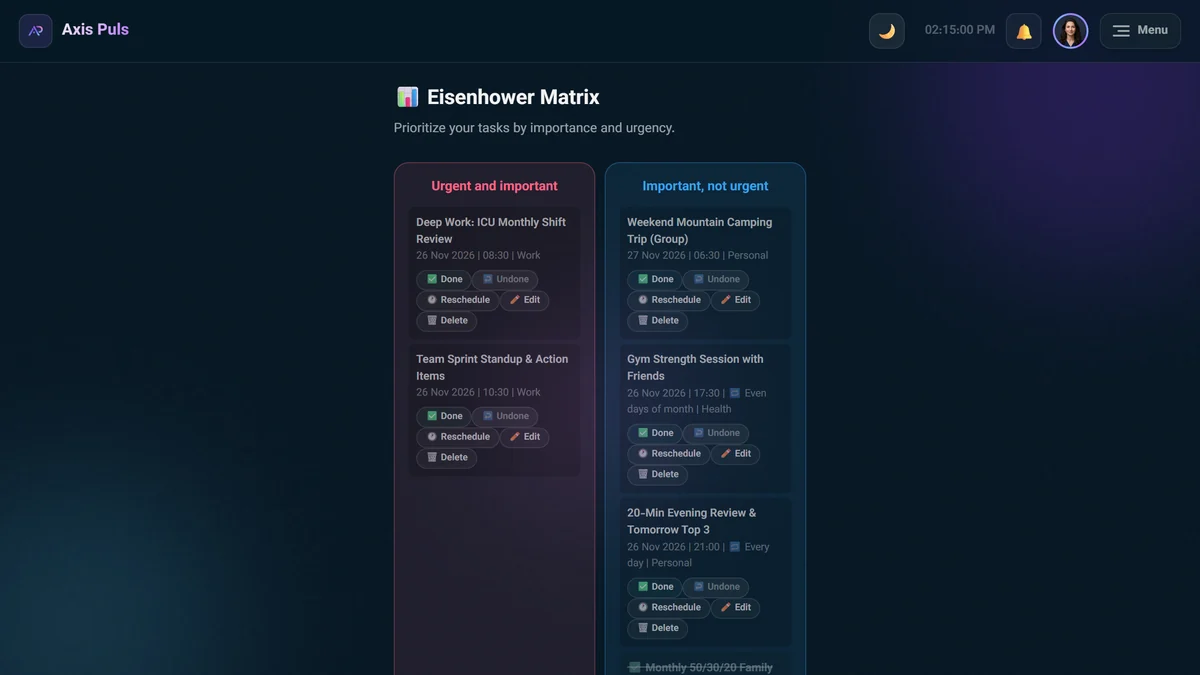
To connect this workflow with adjacent tools and real examples, explore Personal Planner, Eisenhower Matrix, Time-Blocking Guide, Weekly Planning, Smart Checklists, Group Planning.
❓ Frequently Asked Questions from Real Workflows
Build your project checklist today
Pick one project, write the scope on one page, enter the 24 items and tick each phase after approval so the ending stays clean.
Build a checklist in Axis Puls