- Issue: An empty hour in the store and services means a lost customer; Unfair distribution also means dissatisfaction and leaving work.
- Solution: Defining the minimum force for each interval, combining fixed and floating shifts, rotating distribution of unfavorable shifts and centralized registration of requests and changes.
- Result: Full coverage of peak hours, optimal power consumption in off-peak hours and a team that considers the program to be fair.
- Axis Puls role: shifts and capacities are defined and arranged on the same basis once and approved by the manager.
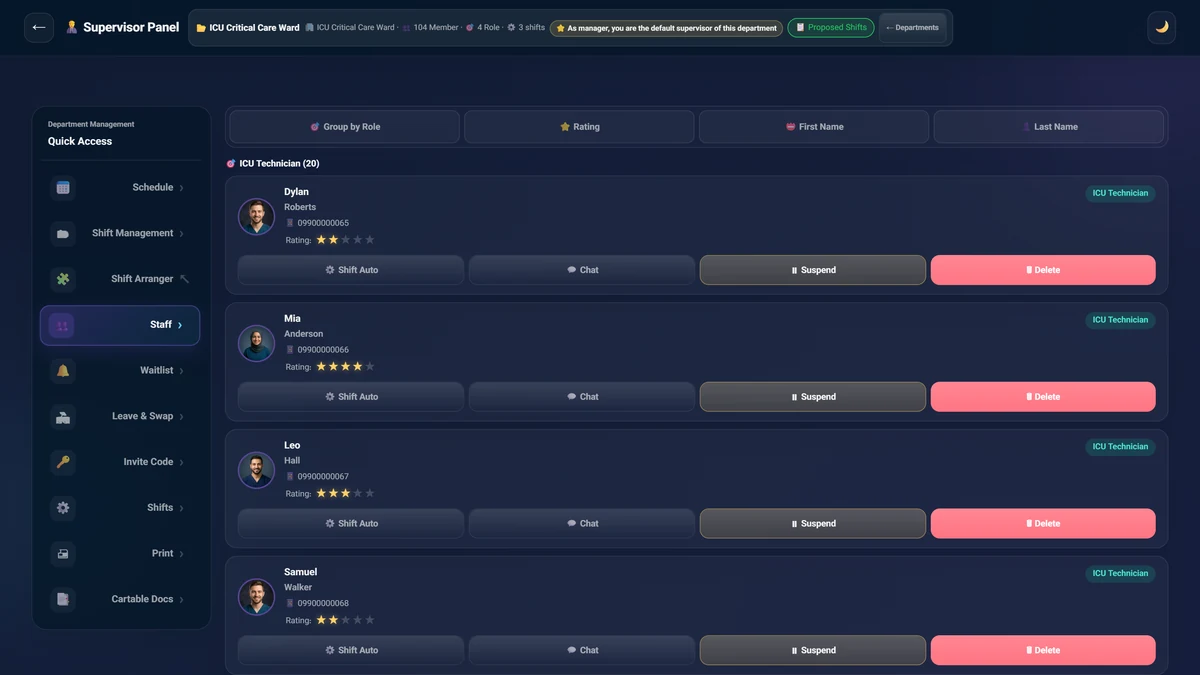
Why is staff shift arrangement serious?
Tracking mandatory hours, rest windows, and fair night/holiday rotations is what separates a calm workplace from constant month-end payroll disputes. In this 5-minute guide, explore practical scheduling rules alongside our live Shift Arranger demo.
Tracking mandatory hours, rest windows, and fair night/holiday rotations is what separates a calm workplace from constant month-end payroll disputes. In this 5-minute guide, explore practical scheduling rules alongside our live Shift Arranger demo.
Full coverage of hours; Minimum power for each interval
The first step is to know Demand Map Is: What hours and days are the most frequent? The store is busy on Thursday evenings, the Saturday morning support is busy, the night watch is sensitive. For each interval, Minimum necessary force Specify by skill combination (eg Cashier + Senior Salesperson). This number is the basis of the layout; A program that does not guarantee at least every interval is not a program.
Identifying high-traffic periods of the week and allocating more power to them.
| Work-Hour & Shift Factor | Manual Sheets & Paper Logs | Structured Control in Axis Puls |
|---|---|---|
| Daily & Monthly Hour Caps | Added up by hand at month-end after overtime already happened | Checked live for each worker while building the roster |
| Night & Holiday Rotation | Unintentional pile-ups on reliable staff trigger resentment | Capped, transparent rotation visible before sign-off |
| Minimum Rest Between Shifts | Depends on visual memory under deadline stress | Automatic block on unsafe back-to-back or night-to-morning turns |
| Leave & Cover Requests | Scattered chats that desync from the wall printout | Centralized request trail with eligible replacement suggestions |
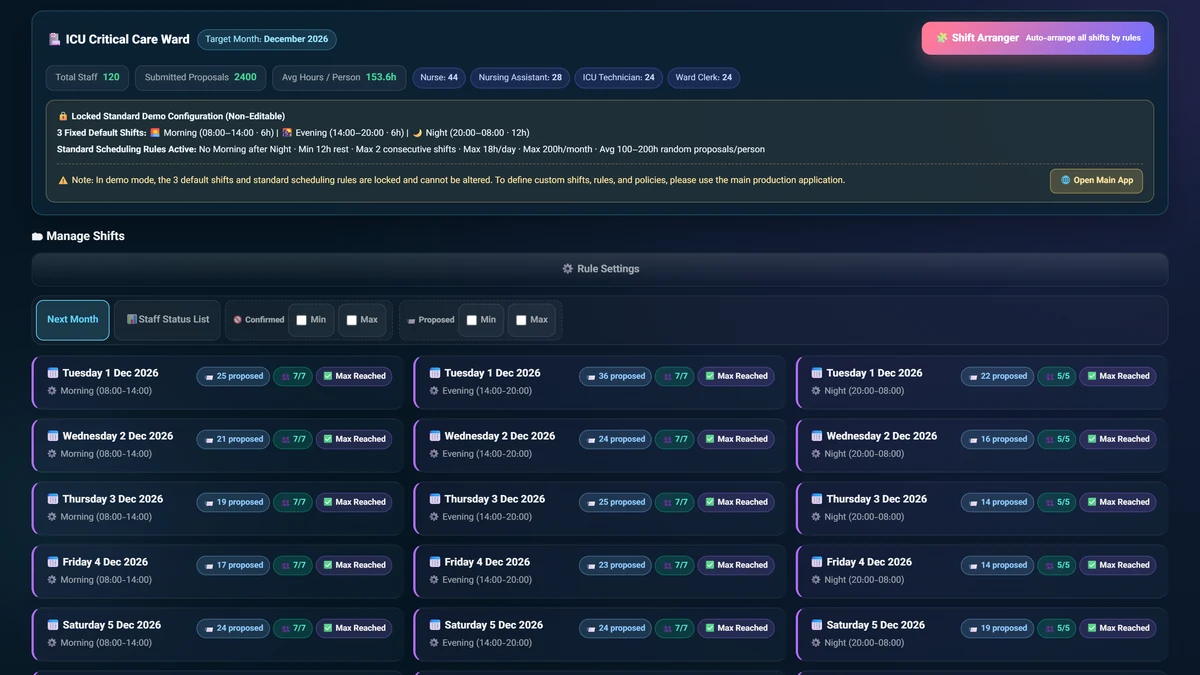
Floating shift and fair distribution of adverse turns
Floating Shift That is, the start and end of the work can be selected in a specific frame (for example, entering between 7 and 9). This flexibility is valuable for administrative staff dealing with traffic and personal matters and helps the manager to cover peak hours with the right mix. But floating does not mean irregularity: the allowed intervals, the ceiling of hours and the minimum coverage of each interval should be defined and recorded in advance so that flexibility does not turn into chaos.
On the other side of the coin, Unfavorable Turns is: busy weekend evenings, off work, long warehousing shifts. If these always reach the same people, it creates dissatisfaction and abandonment. The correct rule is a circular and transparent distribution; Its complete principles in the article Shift adjustment has come A program that is prepared with the participation and opinion of the staff is more acceptable; But the final decision and responsibility for coverage always rests with the manager.
From verbal coordination to legal arrangement with Axis Puls
The difference between oral coordination and the system in Registration and rule is in Axis Puls, the shifts and capacities of each section are defined once in the system; The staff are entered with the department's specific code and their role is confirmed by the manager; The requests are registered in the system and checked with the same rules, and the layout is done on the same basis. The manager checks the output and performs the final verification himself, and if a turn cannot be completed with the defined conditions, the system announces it instead of ignoring the rule.
To begin, select a store or a service unit as an example, run a full period with written rules and compare metrics such as vacancy, notification delay and staff satisfaction with the previous period. New collections can use the system on a trial basis for two months in real conditions and then make a decision based on their own experience.
| Real User Situation | Common Emotional Trap | Sustainable Practical Response |
|---|---|---|
| Falling behind by mid-afternoon | Doubling tomorrow's workload and burning midnight oil | Prune low-value tasks immediately and rescue 1–2 core items |
| Setting monthly or quarterly goals | Writing vague wishes like 'get organized' with no calendar slot | Break each goal into concrete weekly milestones on your timeline |
| Running meetings or group plans | Open-ended calls with no agenda, owner, or stop time | Attach a 3-bullet agenda, hard end time, and action checklist |
| Choosing planning software | Juggling four complex apps until tool fatigue wins | Keep daily tasks, Eisenhower priority, and shifts in one place |
Staff shift — Administrative, store, support, security and service personnel — the front line of customer experience. If there is not enough power during the peak hours of the store, the queue will be long and the customer will leave; If support does not respond within the stated time frame, the collection's validity will suffer; If the guard is left empty, the security is compromised. For this reason, the service shift program has two simultaneous goals: Full coverage of service hours and Satisfaction and longevity of the staff.
A common challenge is that the schedule is dictated by SMS and the manager's mind: requests get lost, bad turns always end up with the same few people, and with every vacation, there is an empty slot. The solution, the same structured path Shift Management In this article, you will read its administrative and service version.
Defining the minimum number of people and the combination of skills required for each time frame.
Identifying the people who can be called to cover the sudden absence of each interval.
The final program and its changes will be announced to all relevant people in a timely manner.
The second step, Managing quiet hours is: keeping the extra power in the low frequency range is a waste of resources. The combination of shorter, part-time and floating shifts in these intervals both controls cost and gives flexibility to the force. Calculation basics of hours and overtime in the article Working hours read
To connect this workflow with adjacent tools and real examples, explore Live Shift Arranger Demo, Smart Shift Management, HR Management, Clinical Productivity Law, Work Shift Adjustment, Shift Control.
❓ Frequently Asked Questions from Real Workflows
No hour should be left empty, no one should feel injustice
Try for two months in the real conditions of your collection and then decide.
Start of trial periodOr test a simulated ward right now without signing up in the Live Interactive Shift Arranger Demo.