- Having principled planning is what separates successful people from confused ones. Without planning, time — our most precious asset — is wasted on urgent but unimportant tasks.
- Follow each section's practical tips in the article's tip boxes.
- Read answers to frequent questions in this page's FAQ section.
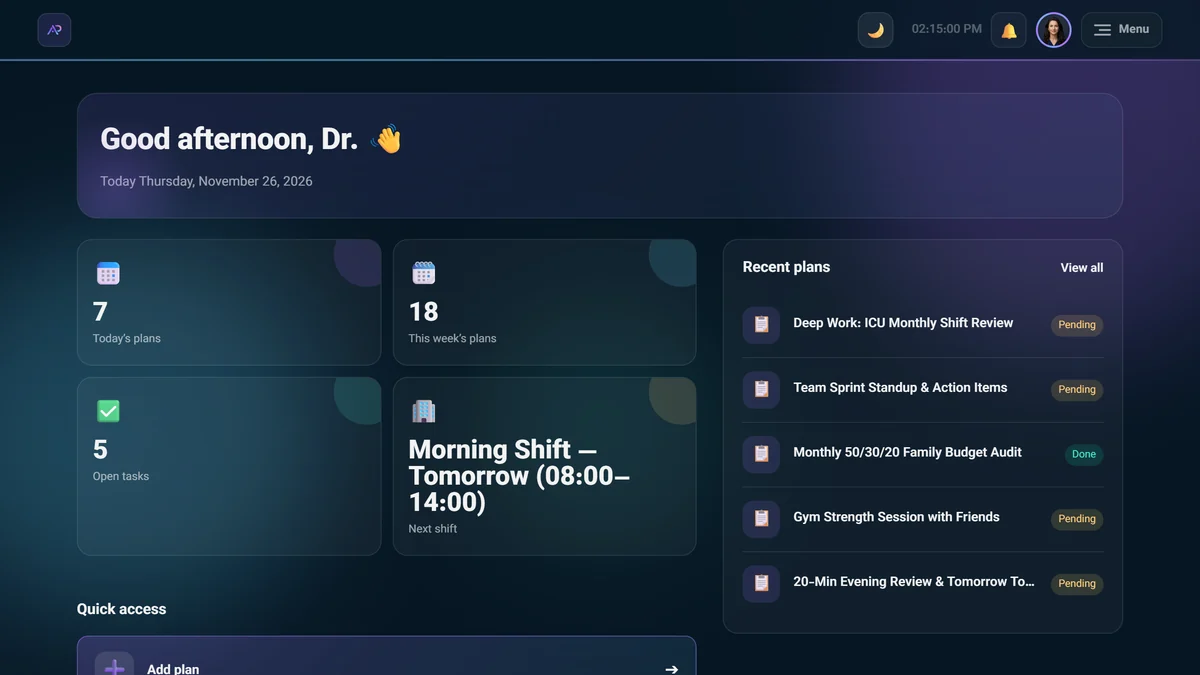
Smart Online Planning Builder (Work, Study & Personal)
Turn smart planning principles into action: build a conflict-free schedule with priority tags, reminders, and instant calendar export.
Live preview of your schedule
Planning basics and why it matters
Planning sticks when it stays lightweight, flexible, and anchored to real priorities rather than rigid minute-by-minute perfectionism. In this 5-minute guide, build a calm daily and weekly execution system.
Planning sticks when it stays lightweight, flexible, and anchored to real priorities rather than rigid minute-by-minute perfectionism. In this 5-minute guide, build a calm daily and weekly execution system.
Practical time-management methods
Using standard frameworks multiplies the effectiveness of your planning:
Good planning means focusing 80% on the work that creates 20% of big results (the Pareto rule).
- Eisenhower matrix: separating tasks by importance and urgency
- SMART goals: specific, measurable, achievable, relevant and time-bound goals
- Time blocking: assigning separate time blocks to deep work
| Eisenhower Quadrant | Quick Diagnostic Signal | Right Practical Action | Everyday Example |
|---|---|---|---|
| 1. Urgent & Important | Real deadline today with clear consequences | Do first during your peak focus block | Finalizing a ward roster, urgent client fix, medical errand |
| 2. Important, Not Urgent | Compounds long-term growth and prevents future crises | Schedule a protected slot on your timeline | Skill study, exercise, monthly budget check, weekly planning |
| 3. Urgent, Less Important | Noisy pings driven by other people's impulsiveness | Batch into a short window or delegate cleanly | Non-critical chat notifications, agenda-free status calls |
| 4. Neither Urgent nor Important | Pure distraction disguised as busywork | Drop intentionally without guilt | Mindless mid-work social scrolling or tweaking folder colors |
Common mistakes in building plans
Extreme perfectionism and filling every hour with no rest are top reasons plans get abandoned.
- Eisenhower matrix: separating tasks by importance and urgency
- SMART goals: specific, measurable, achievable, relevant and time-bound goals
- Time blocking: assigning separate time blocks to deep work
- Eisenhower matrix: separating tasks by importance and urgency
- SMART goals: specific, measurable, achievable, relevant and time-bound goals
- Time blocking: assigning separate time blocks to deep work
- Eisenhower matrix: separating tasks by importance and urgency
- SMART goals: specific, measurable, achievable, relevant and time-bound goals
- Time blocking: assigning separate time blocks to deep work
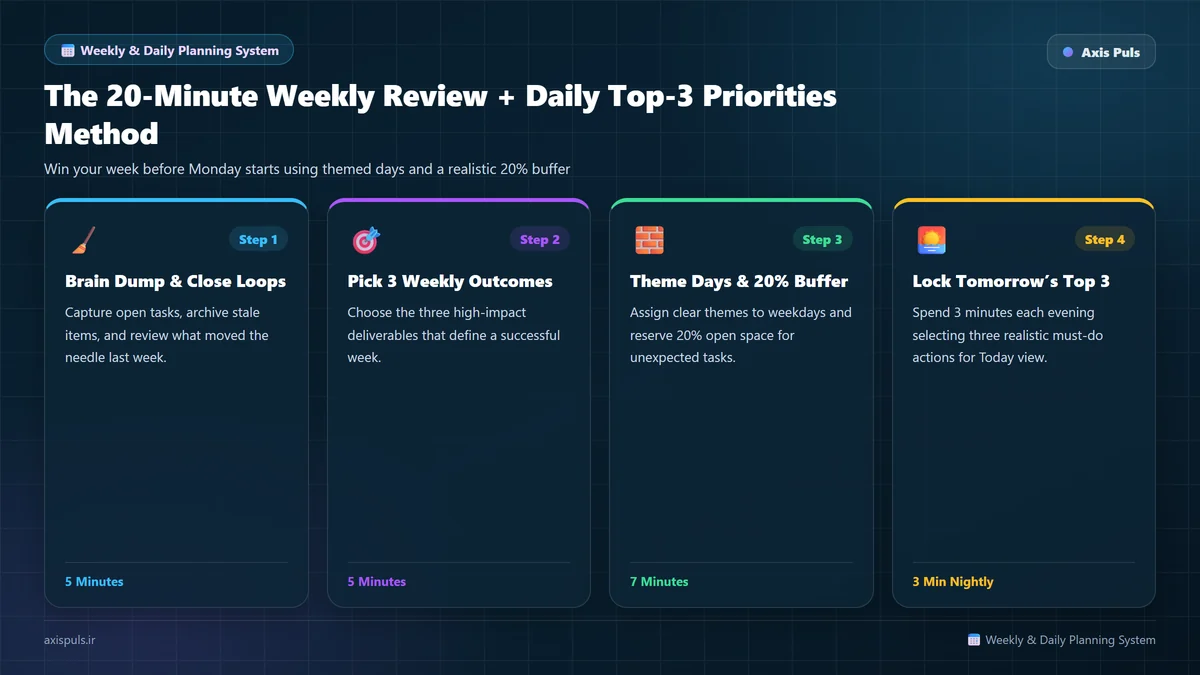
- Pick at most 3 non-negotiable outcomes for today and relegate everything else to secondary status.
- Give each core task a realistic window using time-blocking with short breathing room in between.
- For team meetings, attach a clear goal, hard stop time, and smart checklist of action owners.
- When procrastinating after a delay, use the 5-minute rule to complete just the opening step of your main task.
Digital tools and the Axis Puls platform
With a Gregorian calendar, advanced checklists and smart reminders, Axis Puls makes planning simple and enjoyable.
To connect this workflow with adjacent tools and real examples, explore Personal Planner, Task Prioritization, Weekly Planning, Group Planning.
| Real User Situation | Common Emotional Trap | Sustainable Practical Response |
|---|---|---|
| Falling behind by mid-afternoon | Doubling tomorrow's workload and burning midnight oil | Prune low-value tasks immediately and rescue 1–2 core items |
| Setting monthly or quarterly goals | Writing vague wishes like 'get organized' with no calendar slot | Break each goal into concrete weekly milestones on your timeline |
| Running meetings or group plans | Open-ended calls with no agenda, owner, or stop time | Attach a 3-bullet agenda, hard end time, and action checklist |
| Choosing planning software | Juggling four complex apps until tool fatigue wins | Keep daily tasks, Eisenhower priority, and shifts in one place |
Having principled planning is what separates successful people from confused ones. Without planning, time — our most precious asset — is wasted on urgent but unimportant tasks.
A monthly or annual goal stays a wish until it claims a real 45-minute block on this week's calendar. Spend ten quiet minutes at the start of the week asking: 'Which two concrete steps move my main goal forward before Friday?'—then lock those two blocks onto your timeline like doctor appointments.
For healthcare professionals and shift teams, viewing your next shift, personal priorities, and team collaboration threads under one roof stops you from accidentally booking deep errands right after an exhausting night duty.
To connect this workflow with adjacent tools and real examples, explore Personal Planner, Task Prioritization, Weekly Planning, Group Planning.
❓ Frequently Asked Questions from Real Workflows
Turn your goals into reality with precise planning
Start smart planning in Axis Puls today.
Start for free