
- Agree on fixed training days with friends and record them in one group plan so everyone commits.
- Use a weekly routine for repeating days, such as Saturday and Monday, or even and odd days.
- Set two reminders: two hours before to pack your bag and eat a snack, and 30 minutes before to leave.
- Save the gym-bag checklist inside the same plan, from clothes and shoes to bottle, towel and locker lock.
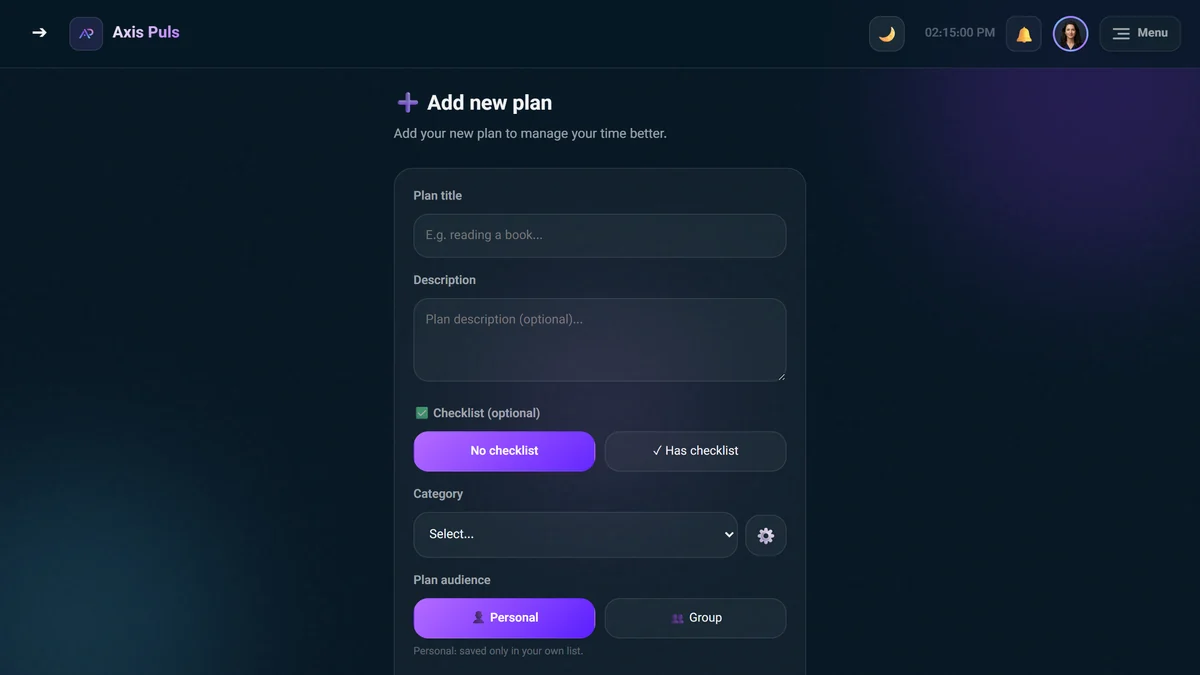
Online Gym Schedule & Workout Bag Reminder Builder
Lock in bag prep, meet-up times with gym buddies, and workout sessions as a repeating routine with 30-minute reminders.
Live preview of your schedule
How to set a gym plan with friends?
Planning anything with friends or teammates—a road trip, camping weekend, workout habit, or team sprint—quickly unravels when RSVPs, packing items, and shared bills get buried inside a noisy group chat. Here is a clean 5-minute playbook for friction-free group coordination.
Planning anything with friends or teammates—a road trip, camping weekend, workout habit, or team sprint—quickly unravels when RSVPs, packing items, and shared bills get buried inside a noisy group chat. Here is a clean 5-minute playbook for friction-free group coordination.
How to plan your gym days?
Choosing the weekly pattern is the heart of a gym plan and directly affects progress and injury risk. A good pattern fits your life calendar and gives the body recovery time. Below are the most common patterns and the principles of a balanced week.
A classic pattern for employees is Saturday, Monday and Wednesday, which leaves one rest day between sessions and keeps the weekend free. Some groups prefer Sunday, Tuesday and Thursday with a similar rhythm. If your gym has separate sessions or your job is shift-based, an even-and-odd-days pattern is more flexible. What matters most is that the pattern stays fixed so mind and body adapt to the rhythm.
- Saturday, Monday and Wednesday gives a good balance of training and rest.
- Shift workers can check even-and-odd or weekend patterns with the group.
- Avoid heavy sessions on consecutive days; keep at least one gap day.
- Pick a fixed time slot so commuting and pre-workout meals stay predictable.
| Group Coordination Dimension | Scattered Messenger Group Chats | Structured Group Plan in Axis Puls |
|---|---|---|
| Headcount Confirmation | Vague 'maybe' replies buried under 200 off-topic messages | Clear invite flow with explicit Accept / Decline status |
| Shared Gear & Task Split | Two people buy charcoal while nobody brings the first-aid kit | One shared checklist attached directly to the event |
| Time or Venue Updates | Latecomers miss changes scrolled out of view | Single source of truth for date, time, and plan notes |
| Splitting Shared Costs | Awkward spreadsheet math days after the trip ends | Built-in group expense tracking and simplified settlement |
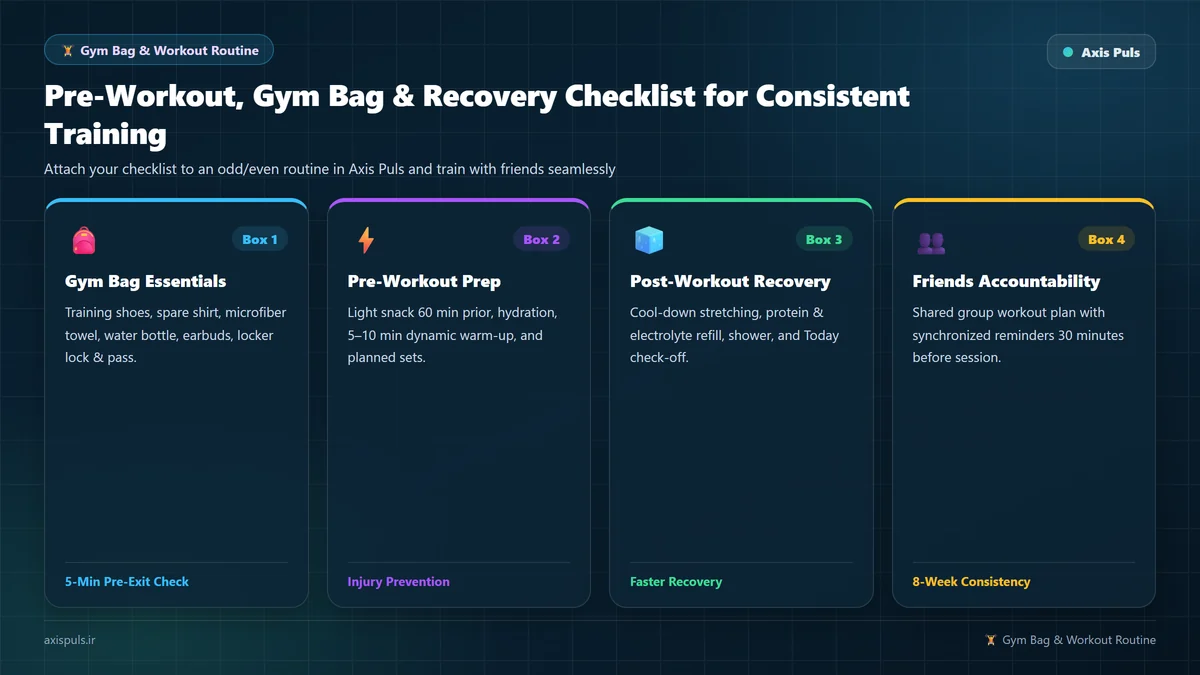
Weekly gym routine with friends
Routine means deciding once and executing automatically every week, with no fresh negotiation and no forgetting. When the gym plan is a weekly routine, it repeats in every member calendar and its reminders arrive on time. This is where groups of a few months separate from groups of a few years.
In Axis Puls you build the workout once and pick weekly repeat, for example Saturday, Monday and Wednesday. From then on, every occurrence appears in your list and in the group members lists with its reminders. If your pattern follows even and odd days, choose that pattern so it rotates with the monthly calendar. If one week is an exception, cancel only that occurrence so the main chain stays intact.
- Record the plan with weekly repeat so it auto-appears for everyone.
- Enable the two-hour and 30-minute reminders for all repeats.
- Save the bag checklist inside the same routine plan.
- Cancel exceptional occurrences individually to protect the chain.
Instead of designing an elaborate system you abandon by Thursday, spend just three minutes each evening closing open loops and picking tomorrow's top three items inside your personal planner. Small, steady habits beat occasional perfection every time.
- Saturday, Monday and Wednesday gives a good balance of training and rest.
- Shift workers can check even-and-odd or weekend patterns with the group.
- Avoid heavy sessions on consecutive days; keep at least one gap day.
- Pick a fixed time slot so commuting and pre-workout meals stay predictable.
Summary and your gym group action plan
You now see the full picture: from agreeing on days to weekly routine, double reminders and the bag checklist. They share one message: groups that stay in the gym are groups with a system, not just short-term motivation. The system means a formal plan with invitation and confirmation, a weekly routine with reminders, and an always-ready bag.
Day one: pick a group of two to four people, agree on two training days, create the group plan and send the invitation card in the chat. Day two: follow up confirmations, switch the plan to weekly routine, enable reminders and save the bag checklist inside it. Day three: hold the first session, arrive on time, take a group photo and ask afterwards what went well. The success metric at the start is holding the session, not perfecting it.
| Preparation Wave | Critical Items & Actions | Common User Mistake | Practical Fix Inside Your Plan |
|---|---|---|---|
| Wave 1: 3–7 Days Ahead | IDs/documents, bookings, essential meds, budget, role split | Packing clothes first and leaving documents to the night before | Pin non-negotiable items at the top of the plan checklist |
| Wave 2: Night Before | Main bag/gear setup, charging devices, home/venue prep | Relying on tired late-night memory | Tick items off one by one as they enter the bag |
| Wave 3: Final 30 Minutes | Keys, phone, bank cards, charger in wall socket, meeting deck | Leaving everyday essentials plugged into the wall | Run a 2-minute doorway scan before stepping out |
| Post-Event Wrap-Up | Settle shared expenses and note missing items for next time | Rebuilding the same list from scratch next month | Reuse your saved plan checklist as a proven template |
The first step to a consistent gym habit is a clear agreement on days, not vague phrases like see you this week. When the exact day and hour are fixed and recorded as a formal invitation, everyone takes it seriously. Training groups with a written plan tend to last longer than groups built on words alone.
To connect this workflow with adjacent tools and real examples, explore Personal Planner, Eisenhower Matrix, Time-Blocking Guide, Weekly Planning, Smart Checklists, Group Planning.
❓ Frequently Asked Questions from Real Workflows
Build your first gym group today
Invite your friends, enable the weekly routine and save the bag checklist; your next session will be your most organized one.
Signing up takes only a few minutes and the start is free.
Log in and create a gym plan